Energy Drinks
Is Sea Buckthorn Juice High in Sugar? Reading the Nutrition Label
04 Sept 2026 • Amisha Surana
No, sea buckthorn juice is not high in sugar. The berry is naturally low in sugar, which is unusual for a fruit juice, and it is a large part of why the drink tastes as sharp as it does.
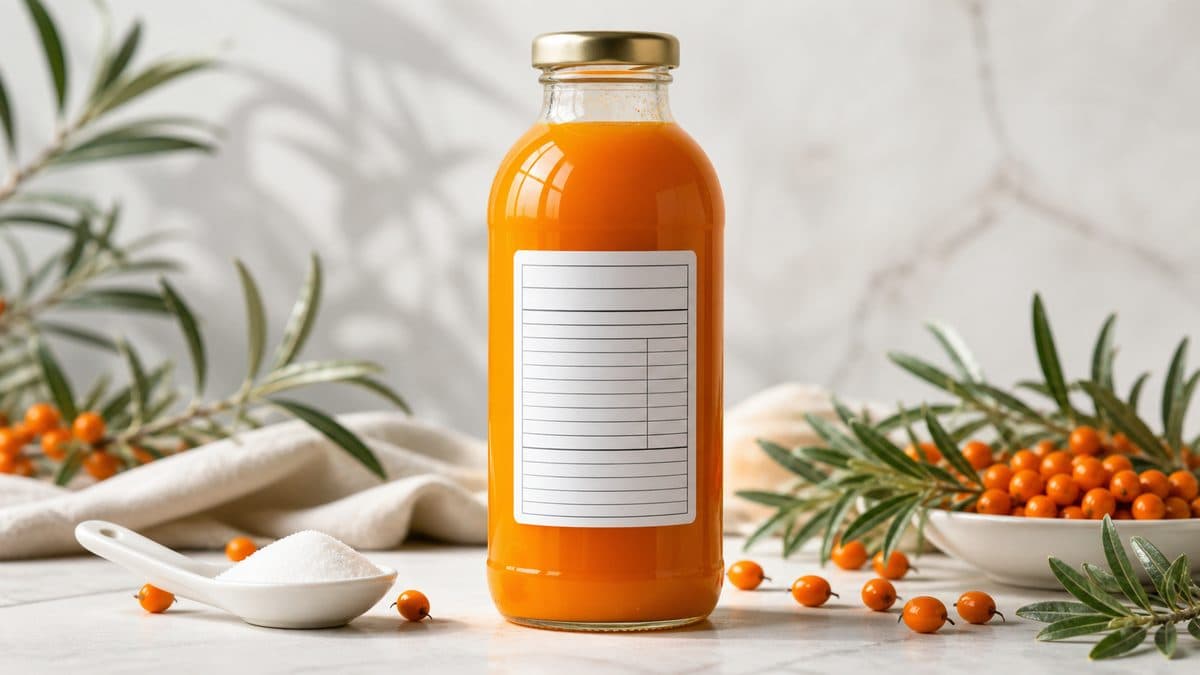
That said, taking a brand's word for it is a poor habit. The nutrition label on the back of any juice bottle will tell you more in ten seconds than the front label will in a paragraph. Here is how to read one properly, and what the different sugar lines actually mean.
Why Sea Buckthorn is naturally low in sugar
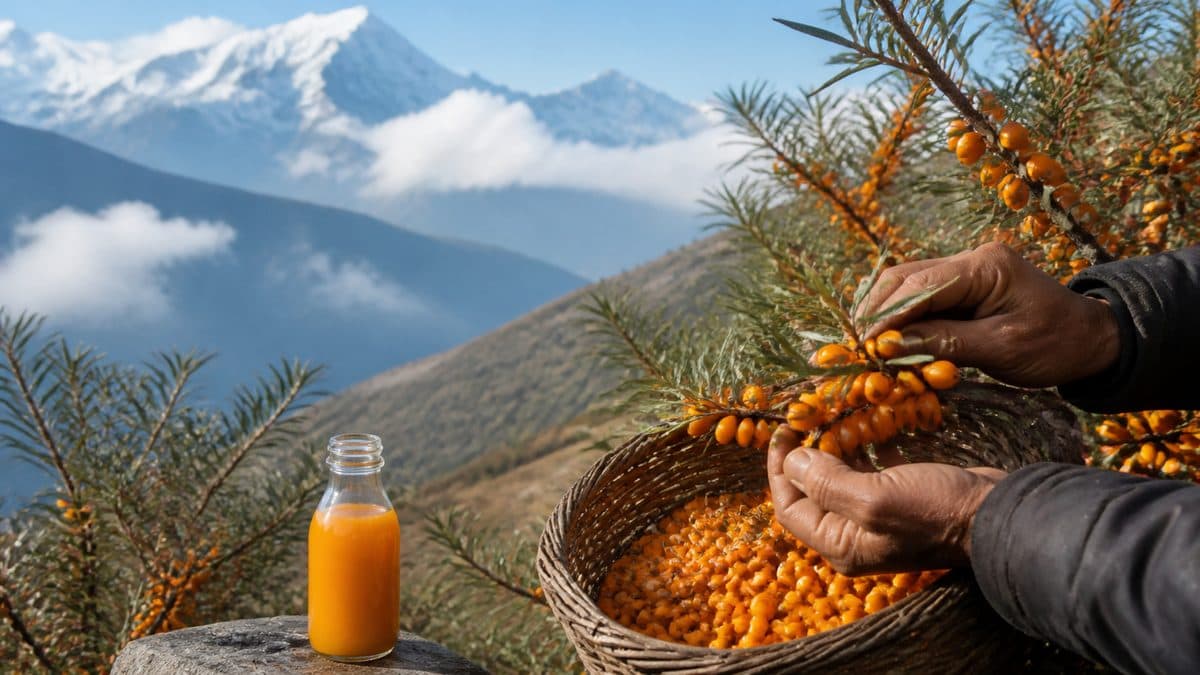
Fruits carry sugar in wildly different amounts. Mango, grape, chikoo and banana sit at the sweet end. Sea buckthorn sits at the far other end, along with a handful of tart berries. It grows in cold, high-altitude conditions in Ladakh, Himachal Pradesh and Spiti, and it never develops the sugar load of a tropical fruit ripened in heat.
What it carries instead is acid. That is what hits you first: a sourness closer to raw amla or a very sharp lime than to any packaged juice you have had. The sourness is characteristic of the fruit, not a sign that something is wrong with the batch. If the berry itself is new to you, what the juice is and how it is made fills in the background.
How to read the sugar lines on a juice label
Total sugars and added sugars are two different things
Total sugars covers everything sweet in the bottle, including the sugar that was in the fruit to begin with. Added sugars covers only what the manufacturer put in. A juice can be honestly high in total sugars and still contain nothing added, simply because the fruit itself was sweet.
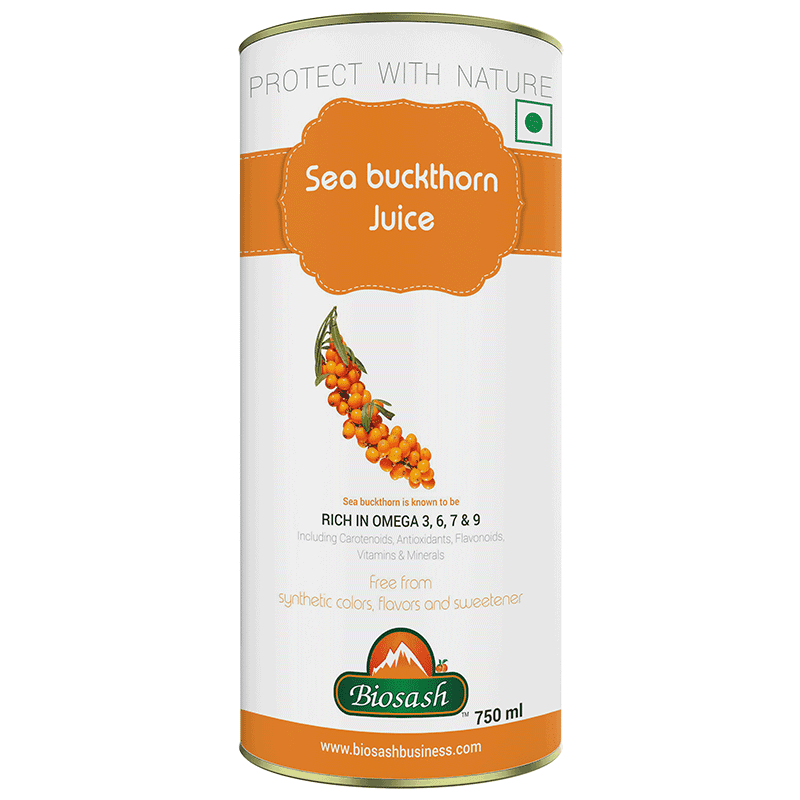
So read both lines. If added sugars shows a value, the product has been sweetened, whatever the front of the pack suggests. Biosash juices are made with no added sugar and no artificial sweeteners, so what you taste is the fruit doing its own thing.
Check the serving size before comparing anything
This is where most label comparisons fall apart. One brand may declare its figures per hundred millilitres, another per full glass, another per small shot. Figures from different bases cannot be lined up against each other. Before you compare two bottles, get both onto the same serving size in your head, otherwise you are comparing a shot glass to a tumbler.
It matters even more with a concentrated juice, because nobody drinks it neat by the glass. A sea buckthorn serving is small and goes into water, so the sugar you are actually swallowing at one sitting is smaller again.
Read the ingredient list, not just the panel
Ingredients are listed in descending order of quantity. Sweeteners travel under many names: glucose syrup, fructose, invert sugar, fruit juice concentrate, honey, cane juice. Concentrate is the one that slips past most people, because it sounds like fruit rather than sugar. If a sweetener appears near the top of the list, the panel will confirm it, but the list gets you there first.
Sugar is only one line on that panel, of course. For everything sitting around it, a full breakdown of what the juice carries is worth reading once.
Sour does not automatically mean sugar-free
Worth saying plainly, because it is a common assumption. Acidity masks sweetness. A drink can be loaded with sugar and still taste tart, which is exactly how most bottled lime and mixed-fruit drinks are built. Sourness on the tongue tells you about the acid content, not the sugar content.
With sea buckthorn the two happen to line up, since the berry is genuinely low in sugar and genuinely high in acid. But the general rule holds: trust the panel, not your tongue.
What no added sugar really means on a Sea Buckthorn label
It means exactly what it says and nothing more. No sugar was added during manufacture. It does not mean the product is sugar-free, and any fruit juice will carry some natural fruit sugar.
A few other things worth knowing about a bottle carrying that claim:
- It will usually taste sharper than you expect, because sugar was not there to round the edges off.
- Batch-to-batch taste can vary a little, since fruit varies with the season and nothing is being added to standardise the flavour.
- It will not taste like the sweetened juices most of us grew up on, and the first week is an adjustment.
Our nutritional juices are made this way on purpose. Sea buckthorn is worth drinking for what the fruit carries, including Vitamin C, Vitamin E, carotenoids and flavonoids, and sweetening it would work against the point of it.
Making Sea Buckthorn juice easy to drink
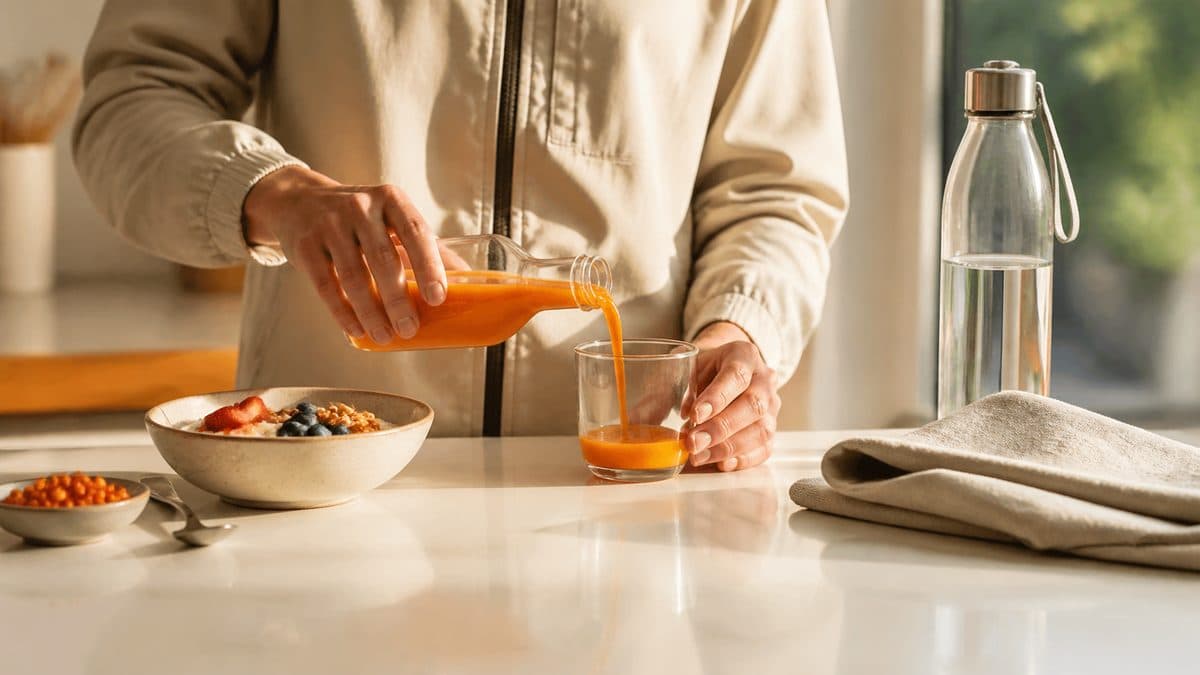
The usual complaint is not the sugar, it is the tang. Biosash suggests about 10 ml morning and evening, mixed into water, roughly twenty minutes before meals. A few practical adjustments help:
- Use more water than you think you need. Under-dilution is the single most common mistake.
- Chilled water blunts the sharpness noticeably; hot water does not, and heat is not doing the juice any favours.
- Take it at the same two moments each day so it attaches to an existing routine rather than needing willpower.
People often keep it as their morning drink alongside the rest of their everyday energy routine, simply because a fixed slot in the day is what makes any habit survive past the first bottle.
The short version
Sea buckthorn juice is naturally low in sugar, and a label check will confirm it in seconds: look at total sugars, look at added sugars, note the serving size, then scan the ingredient list for sweeteners under other names. If the acidity rather than the sugar is what you are wondering about, what to know before you start covers that side of it. And if you are watching your diet closely for any medical reason, that is a conversation for your own doctor, who knows what else is on your plate.