
Healthy Skin and Body
Sea Buckthorn Juice for Glowing Skin: The Omega-7 Glow Secret
01 Sept 2026 • Amisha Surana
Sea buckthorn keeps appearing in skin conversations for one specific reason: Omega-7. It is a fatty acid the body uses in maintaining skin and mucous membranes, and it is uncommon in plants, which makes a small orange Himalayan berry unusually interesting to anyone thinking about skin from the inside.
The honest framing matters, though. No juice resurfaces skin the way a facial does, and nothing you drink shows a difference by Friday. What good nutrition does is supply raw material, consistently, over a long enough stretch that your skin actually gets a chance to use it.
Why omega-7 in sea buckthorn stands out
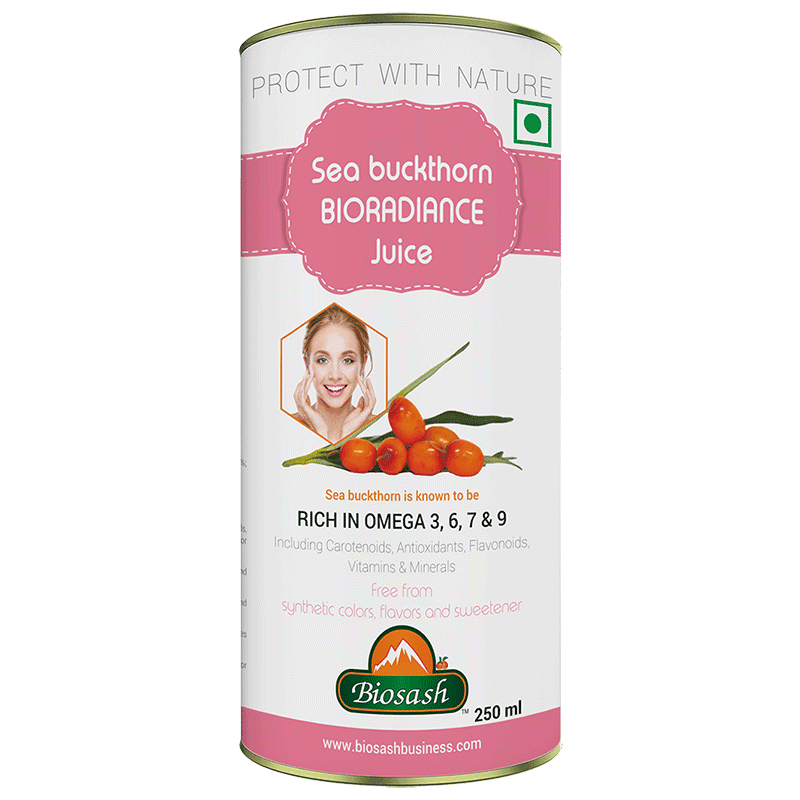
Sea buckthorn is one of very few plant sources containing Omega 3, 6, 7 and 9 together. Most familiar plant oils give you some combination of Omega 3, 6 and 9. Omega-7, or palmitoleic acid, is the gap in that list, and sea buckthorn fills it in a way very few plants do.
Palmitoleic acid is one of the fatty acids the body works with in maintaining skin and mucous membranes. Those are tissues that face the outside world and turn over continually, so they draw steadily on whatever the diet provides. That is the whole basis of the Omega-7 interest, and it is worth reading what palmitoleic acid actually is before deciding how much weight to give it. It is a structural nutrition story, not a cosmetic one.
The rest of the nutrient picture
Omega-7 gets the attention, but it does not travel alone in the berry, and each of the four omegas does a different job. Sea buckthorn is a good source of Vitamin C, and it also carries Vitamin E, carotenoids including beta-carotene, and flavonoids.
Vitamin C is one of the nutrients the body draws on when making collagen, which is the protein that gives skin its structure. Carotenoids are the reason the berry is that vivid orange, and they belong to the same broad family of plant compounds found in carrots, pumpkin and papaya. Taken together it is a fairly complete package for something that grows wild in Ladakh, and it is why sea buckthorn anchors much of our nutritional juices range.
Sea Buckthorn juice and oil do different jobs
Sea buckthorn shows up in two very different formats and people often confuse them. Understanding the difference between drinking it and applying it saves both money and disappointment.
The juice
Pressed from the berry, tangy, water-based, naturally low in sugar, and taken by mouth. Its contribution is nutritional. It feeds whatever your body is building, slowly, along with everything else you eat.
The oil and topical formats
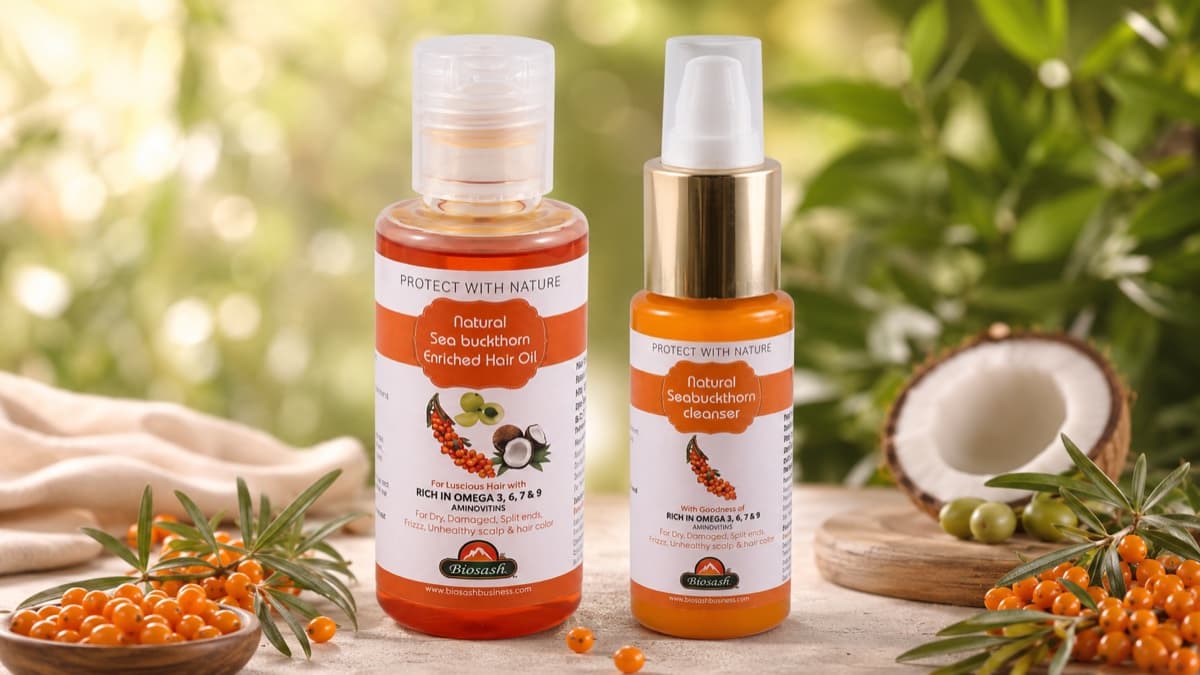
Sea buckthorn seed and pulp oil is a different material altogether, deep orange and rich, and it goes onto the skin rather than into you. It works at the surface, immediately and visibly, in the way any good facial oil does.
Neither replaces the other. Someone using only creams is working on one side of the problem, and someone drinking juice while ignoring basic skincare is working on the other. Our skin and beauty collection covers both approaches for exactly this reason.
What to realistically expect, and by when
Skin renews itself slowly, and any nutritional change moves at the pace of that renewal rather than the pace of your patience. Think in months. People who report a difference usually describe texture and evenness before anything else, and they usually notice it in photographs rather than in the mirror, because a daily mirror hides gradual change extremely well.
A few things make the picture clearer:
- Take it at the same time each day so the routine is genuinely consistent
- Take one plain, unfiltered photo in daylight before you begin, and another after a couple of months
- Change one thing at a time, or you will never know what did what
- Judge on texture, tone and dryness rather than on any single blemish
Be sceptical of any before-and-after that looks dramatic in two weeks. Lighting, angle and a fresh coat of moisturiser explain most of those.
The habits that outrank any juice
Nutrition is one lever among several, and it is not the strongest one. Sleep, sun protection, gentle cleansing and adequate water do more visible work than any single ingredient in your fridge. Over-washing, harsh scrubbing and stacking too many actives at once undo more than a good diet can quietly rebuild.
Variety in the diet matters as much as any one addition. A plate with colour in it, some healthy fat, and enough protein gives your skin more to work with than a single concentrated juice on top of an otherwise thin diet. Sea buckthorn earns its place as one useful addition among several, not as a shortcut past them.
How people actually take Sea Buckthorn juice
Biosash's stated usage is 10 ml in the morning and 10 ml in the evening, mixed in water, roughly twenty minutes before meals. The juice is naturally tangy and quite acidic, which surprises most first-time drinkers. That sourness is characteristic of the berry and not a sign that anything is wrong.
Dilute more heavily if it is too sharp at the start, rather than adding sugar to it. Biosash juices carry no added sugar and no artificial colours, flavours or sweeteners, and sweetening a low-sugar juice at home rather defeats the reason for choosing it. Keep the bottle refrigerated once opened and shake it before pouring, since natural pulp settles.
If you have a skin condition under a doctor's care, or you take regular medication, mention any new daily supplement to your own doctor before starting.
Glow, in practice, is mostly the sum of unremarkable habits held for a long time. Sea buckthorn is a genuinely nutrient-dense addition to that list, particularly for its Omega-7, but it works the way nutrition always works: quietly, slowly, and only if you stay with it.