Energy Drinks
What Is Sea Buckthorn Juice? Benefits, Nutrition and How It's Made
10 Sept 2026 • Riddhi Jain
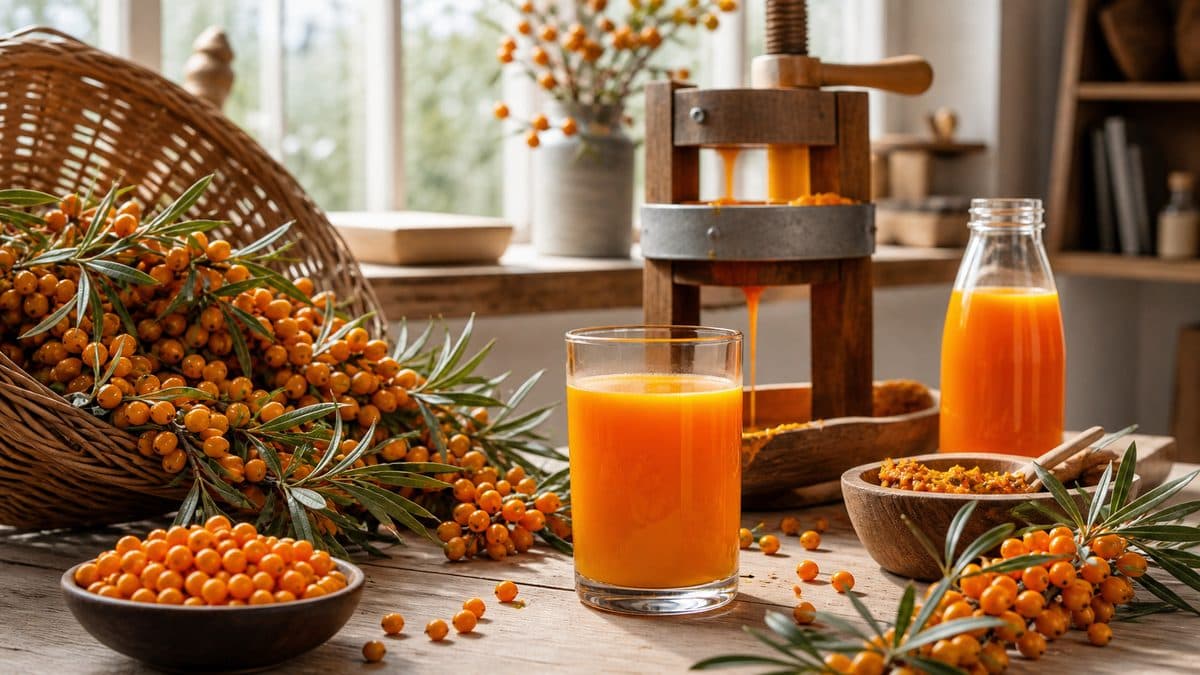
Sea buckthorn juice is pressed from the small orange berry of Hippophae rhamnoides, a thorny shrub that grows in cold, high-altitude regions. In India the fruit comes largely from Ladakh, Himachal Pradesh and Spiti. The juice is bright orange, distinctly sour, naturally low in sugar, and usually taken in small measured servings diluted in water rather than drunk by the glass.
What makes the berry worth knowing about is its nutrition. Sea buckthorn is one of very few plants that contain Omega 3, 6, 7 and 9 together, it is notably rich in the uncommon Omega-7, and it is a good source of Vitamin C alongside Vitamin E, carotenoids and flavonoids. Here is the fuller picture.
The sea buckthorn berry behind the juice
Sea buckthorn grows where most fruit will not. The bushes handle cold, wind, thin soil and altitude, and in the Indian Himalaya they are a familiar sight along riverbeds and slopes where the growing season is short. The plant has been part of Himalayan, Tibetan and Ayurvedic practice for a very long time, which is unusual for a fruit that most of urban India has only heard of recently.
The berries are small, soft and packed tightly along thorny branches, so harvesting is slow work done by hand within a narrow ripening window. That difficulty is worth mentioning early, because it explains almost everything about how the juice is priced and why supply is limited.
What is actually in it
The fatty acids
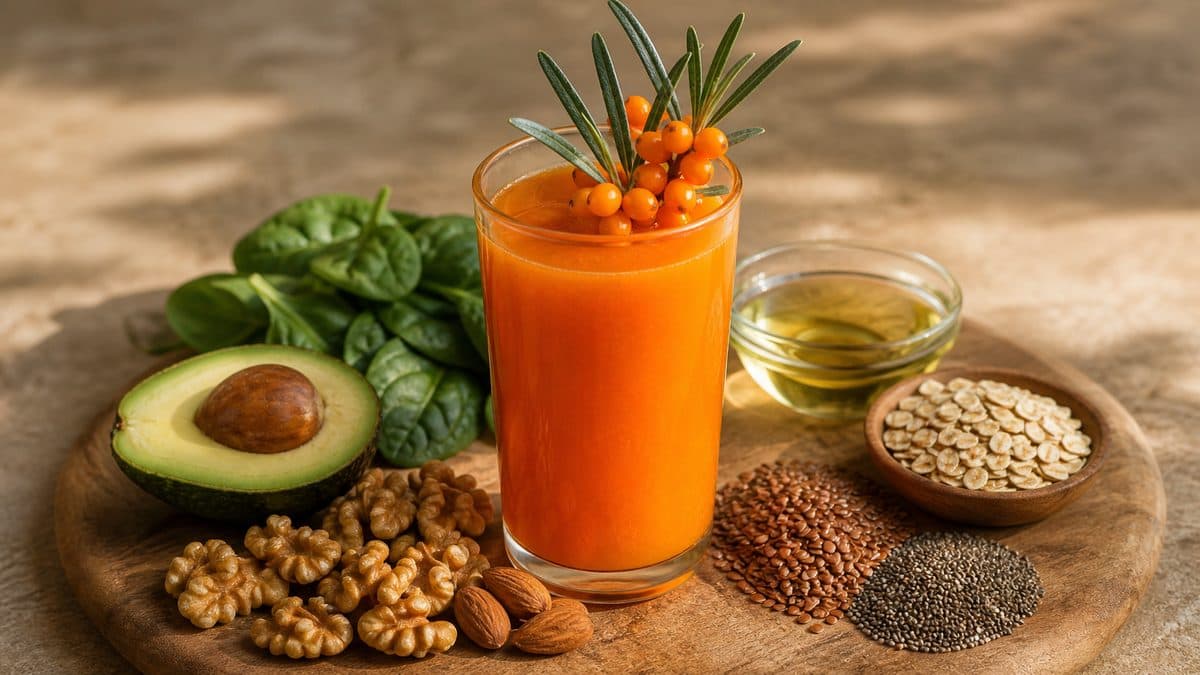
Very few plant foods deliver Omega 3, 6, 7 and 9 in one place, and sea buckthorn is one of them. Omega-7, or palmitoleic acid, is the standout, because it is rare in the plant world and turns up in very few everyday foods. Omega-7 is a fatty acid the body uses in maintaining skin and mucous membranes. Most Indian diets take in Omega 6 without effort and Omega 3 less consistently, so the combination is what people find interesting here rather than any single number.
Vitamins and plant pigments
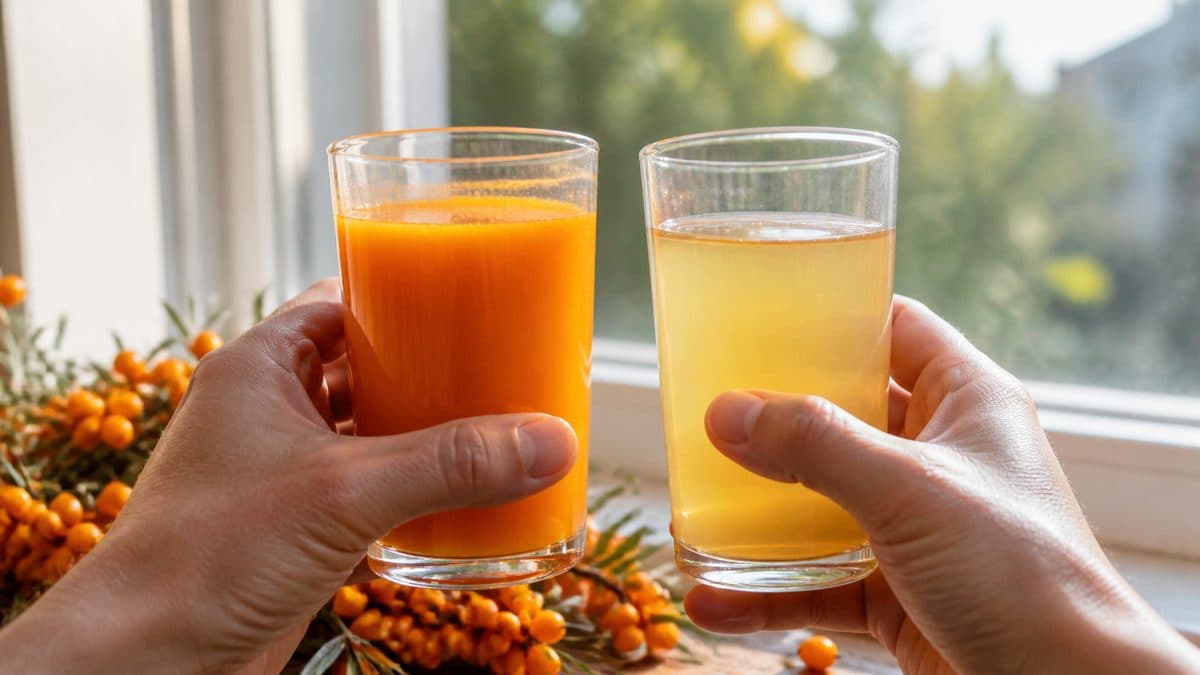
The berry is a good source of Vitamin C and also contains Vitamin E, carotenoids including beta-carotene, and flavonoids. Carotenoids are what give the juice its deep orange colour, so a pale, watery-looking juice is telling you something about how much fruit is in the bottle. How nutrients arriving inside a whole fruit compare with the same names printed on a tablet is a fair question, and the two are worth setting side by side.
Sugar and acidity
Sea buckthorn is naturally low in sugar, which sets it apart from most fruit juices, and it is genuinely acidic. That sourness is characteristic of the fruit and not a fault or a sign of spoilage. It is also the reason honest producers dilute rather than sweeten, and why some cheaper blends lean on apple or grape concentrate to soften the taste.
How sea buckthorn juice is made
The route from bush to bottle is short in description and fiddly in practice. Berries are picked by hand, brought down from altitude quickly, then sorted and washed to remove leaves, stems and anything damaged. The fruit is pulped, and the pulp is separated from seed and skin. That pulp is prepared into a drinkable juice and heat treated so it stays safe on a shelf in an Indian kitchen.
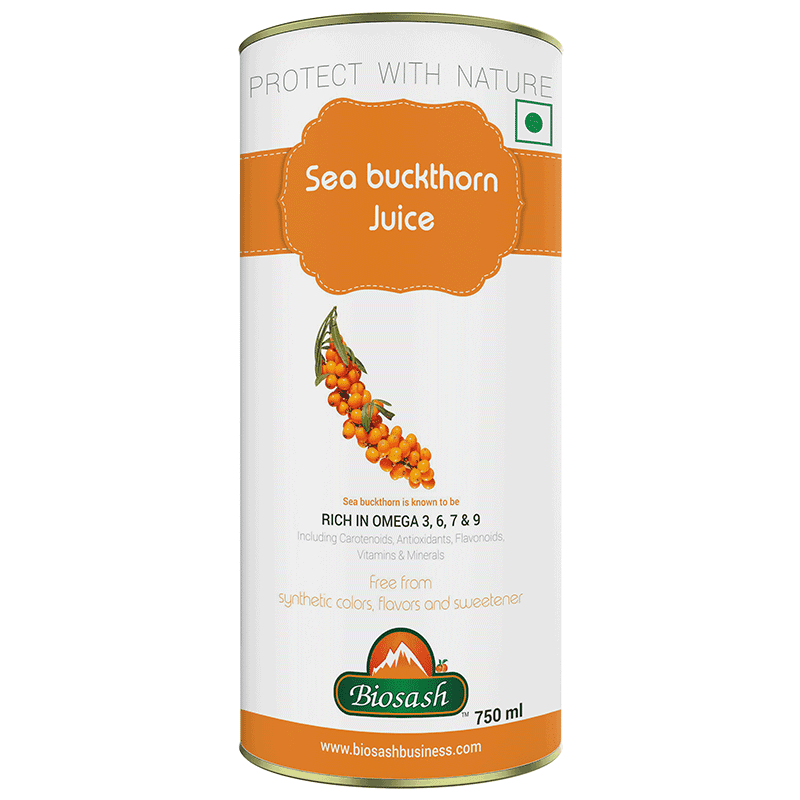
What happens around those steps matters as much as the steps themselves. Biosash juices are manufactured under WHO-GMP certified manufacturing and batch tested at a NABL-accredited laboratory, with no added sugar and no artificial colours, flavours or sweeteners. You can see the range on our nutritional juices page.
Why people include it in their routine
Most people who take sea buckthorn juice regularly are doing something simple: adding a nutrient-dense food to a diet that is otherwise fairly repetitive. It contributes Vitamin C, Vitamin E, carotenoids, flavonoids and that unusual fatty acid mix, in a form that takes ten seconds to prepare and does not add sugar to the day. That is a smaller and more useful idea than a cleanse, a word that rarely means what the label suggests.
On our site the same products appear under everyday browsing themes such as energy and immunity. Those are categories that help people find things, not claims about what a bottle does. A juice is food. It supports a routine built on sleep, meals, water and movement, and it does not stand in for any of them.
How to drink it
Biosash's stated usage is 10 ml in the morning and 10 ml in the evening, mixed in water, about twenty minutes before meals. A few practical notes make it easier to stick with.
- Shake the bottle before pouring, since sediment settling is fruit rather than a defect
- Use the measuring cap instead of estimating, because the juice is concentrated and sour
- Dilute generously at first and reduce the water as you get used to the taste
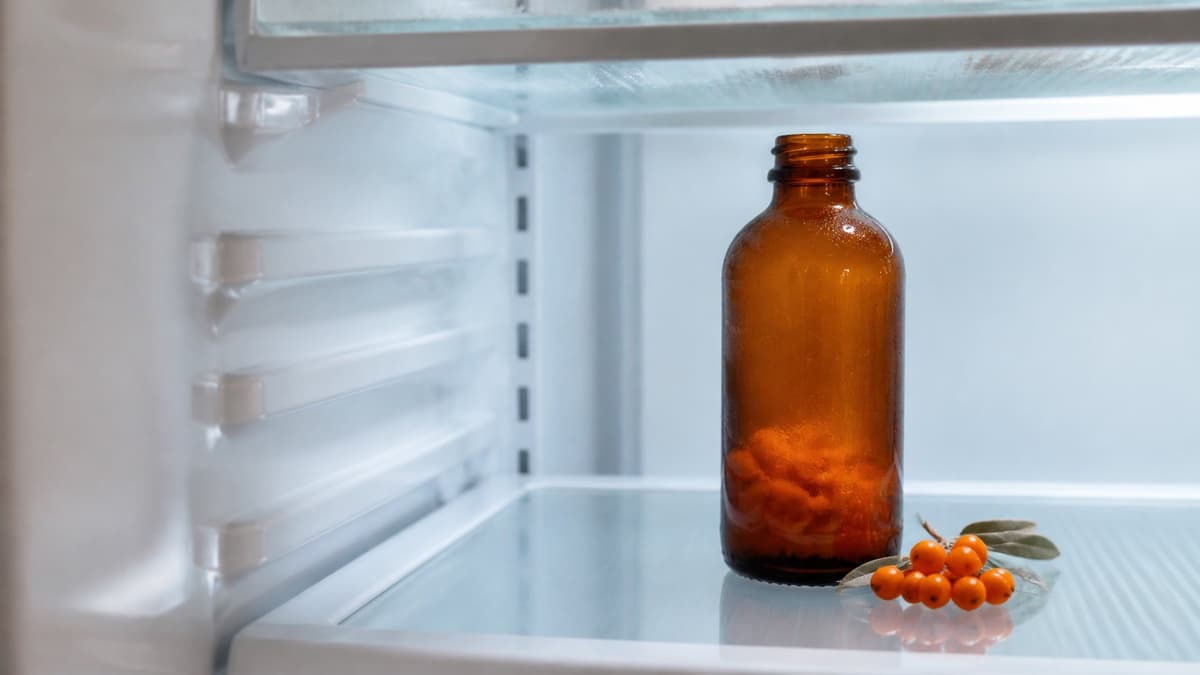
- Keep it refrigerated after opening and close the cap properly
- Take it at a fixed point in your day, since consistency matters more than timing
Who should check before starting
Sea buckthorn juice is a food, but it is acidic and it is concentrated. If you are pregnant or breastfeeding, taking regular medication, or being treated for any condition, have a quick word with your own doctor before you add it to your routine. That is sensible for any new supplement, not a warning specific to this berry.
Sea buckthorn juice earns its place through nutrition rather than novelty: a hardy Himalayan berry, an uncommon combination of fatty acids, useful vitamins, and very little sugar. Treat it as a small daily addition to food you already eat, and you will be judging it on the right terms.