Energy Drinks
Iron-Rich Natural Drinks: Where Sea Buckthorn Juice Fits In
13 Sept 2026 • Amisha Surana
Iron-rich drinks are a popular search in Indian kitchens, and the honest answer is that most drinks are not where dietary iron mainly comes from. Iron largely arrives through food: dals, greens, millets, jaggery, nuts and seeds. Drinks play a supporting role.
Sea buckthorn juice is worth discussing here, but not as an iron source. Its relevance is different and more interesting. It is a good source of Vitamin C, and Vitamin C is one of the nutrients that helps the body take up iron from plant foods. That makes it a partner to an iron-conscious diet rather than a substitute for one.
Where iron actually comes from in an Indian diet
Most Indian households, particularly vegetarian ones, get their iron from plant sources. Those are the everyday staples rather than anything exotic.
- Dals and whole pulses, especially rajma, chana and masoor
- Dark leafy greens such as palak, methi, bathua and drumstick leaves
- Millets, particularly ragi and bajra
- Jaggery and til, which is why the winter combination of the two is so old
- Dates, raisins, cashews, almonds and pumpkin seeds
- Cooking in a well-seasoned iron kadhai, a habit worth keeping
Plant iron is real iron, but the body takes it up less readily than iron from animal foods. That is simply how the chemistry works, and it is the reason the rest of the plate matters so much for anyone eating mostly vegetarian. Needs are not identical for everyone either, which is why iron, folate and Vitamin C tend to be discussed together in women's nutrition.
The drinks people usually mean
When people search for iron-rich drinks, a fairly consistent set of options comes up, most of them made at home.
Vegetable and green juices
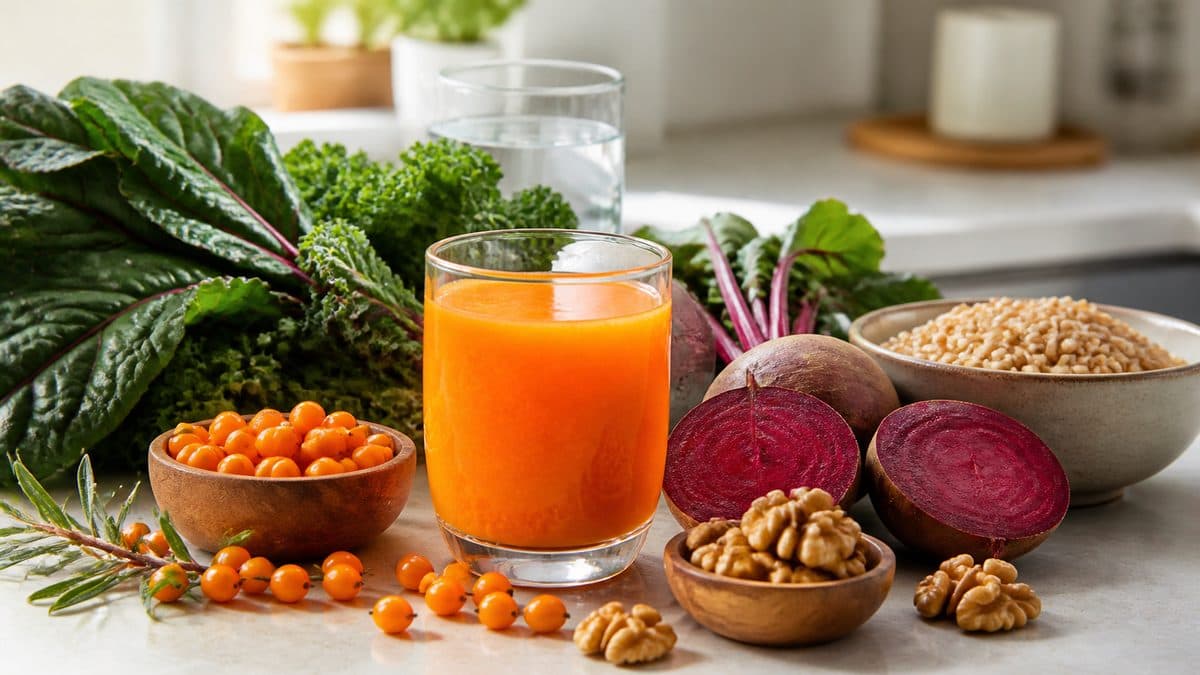
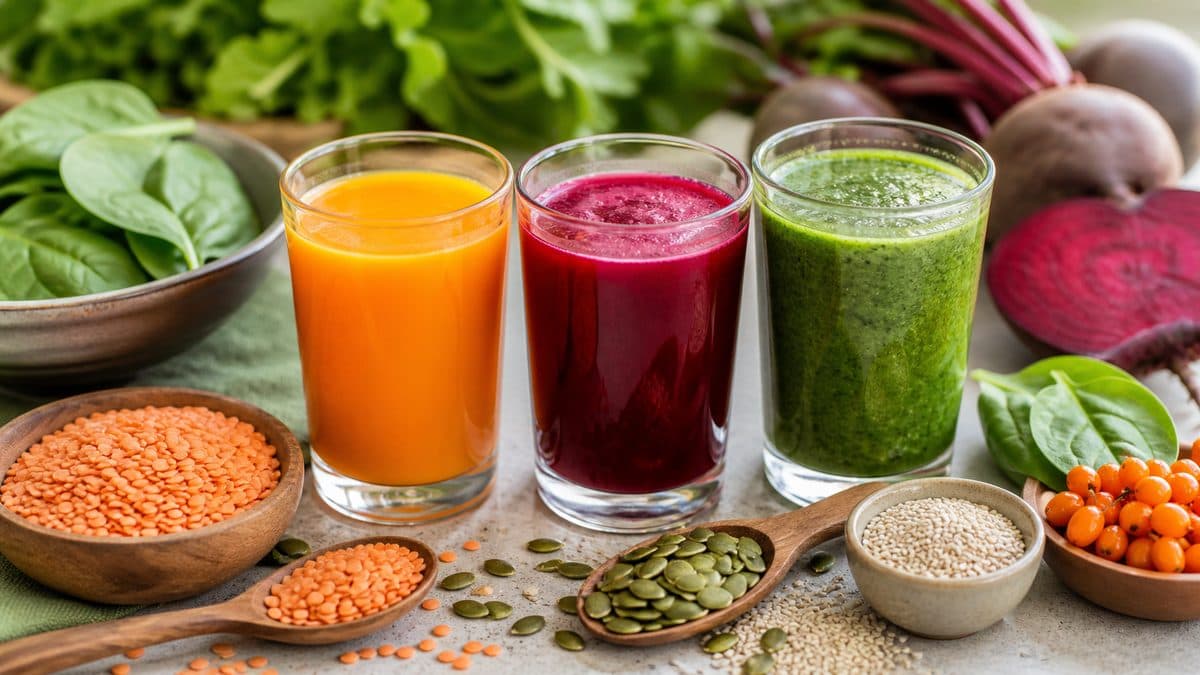
Beetroot juice is the most popular by far, usually blended with carrot, and palak or other greens sometimes go in alongside. These are worth drinking for their overall nutrition, though blending greens into a glass does not change how plant iron behaves once it is inside you.
Traditional grain and seed drinks
Sattu sharbat in summer, ragi malt or ragi java in the South, and thin millet porridges in many regions. These are proper food in liquid form and carry the nutrition of the grain itself, which is a good deal more than most juices manage.
Jaggery and dry-fruit drinks
Date and jaggery based drinks, soaked raisin water, and til-based winter preparations. These belong to the older Indian habit of drinking something nourishing rather than merely something wet.
Vitamin C, iron, and where Sea Buckthorn enters the conversation
The reason nutritionists pair citrus with dal, or tell you to squeeze lemon over your palak, is straightforward. Vitamin C is one of the nutrients that helps the body take up iron from plant foods. Combining them in the same meal is a very old kitchen habit that turned out to have good reasoning behind it.
Indian cooking already does this constantly without announcing it. Lemon on rajma chawal, amchur in chana, tamarind in sambar, tomato in almost every North Indian gravy, a wedge of nimbu on the side of the thali. None of that was designed around nutrient charts, but the pairing holds up.
Where Sea Buckthorn juice actually fits
Sea buckthorn juice belongs in this discussion as a Vitamin C rich, nutrient-dense addition rather than as an iron drink. Being clear about that is more useful than overselling it.
Hippophae rhamnoides grows in the cold, high-altitude parts of India, mainly Ladakh, Himachal Pradesh and Spiti. It is a good source of Vitamin C, and it also carries Vitamin E, carotenoids including beta-carotene, and flavonoids. It is one of very few plant sources with Omega 3, 6, 7 and 9 together, and it is notably rich in Omega-7, which is uncommon in plants. It is naturally low in sugar, which is why it can sit in a daily routine without the sweetness of most fruit juices.
Practically, that means it works best taken close to a meal that carries plant iron rather than on its own in the afternoon. It is one of the reasons the juice appears in our nutritional juices range and in the blood builder collection, where the focus is on everyday nourishment from whole ingredients.
Small habits that make an iron-conscious diet work better
Timing and combinations do more for a plant-based diet than adding one more bottle to the fridge.
- Put something Vitamin C rich in the same meal as your dal or greens, not three hours later
- Give tea and coffee some distance from your main meals, since both interfere with iron uptake from food
- Soak and sprout pulses when you have the time, which is what our grandmothers did anyway
- Keep using the iron kadhai, especially for anything sour or tomato-based
- Eat variety rather than relying on one hero ingredient to carry the whole diet
Knowing where food stops and a doctor starts
Diet is one part of nutrition and it is not diagnostics. If a test result has been flagged, or someone has told you your levels need attention, that is a conversation for your own doctor and not something a juice bottle can settle. The same goes if you already take a prescribed supplement, since combining things without advice is never a good idea.
What food can do is build a steadier base underneath all of that: regular meals, a varied plate, sensible pairings, and enough attention to what you drink alongside them.
Sea buckthorn earns its place in an iron-aware kitchen honestly, as a low-sugar, Vitamin C rich juice with a tartness that catches most people out on the first glass, and one that fits neatly beside a plate of dal and greens. Taken that way, with expectations set correctly, it is a genuinely useful thing to keep in the fridge.