Energy Drinks
Sea Buckthorn Juice and Liver Wellness: A Nutritional Perspective
12 Sept 2026 • Riddhi Jain
Liver wellness is mostly a lifestyle subject, not a supplement subject. What you eat over months, how much you sleep, how much you move and how much alcohol is in the picture do far more than anything you can pour from a bottle.
Sea buckthorn juice fits into that picture as food. It is nutrient-dense, naturally low in sugar, and it contributes vitamins and fatty acids to a diet. That same nutritional framing is the right one when people ask about metabolic wellness too, and it is worth setting out properly before looking at where the juice belongs.
What the liver actually does
The liver is one of the busiest organs in the body and its work is largely metabolic. It processes nutrients arriving from digestion, stores certain vitamins and minerals, produces bile that helps with the digestion of fats, and handles a long list of routine chemical work the body needs done continuously.
Which explains why diet comes up in every conversation about it. Almost everything you eat and drink passes through this organ's workload. What you send it, day after day, is the part of the picture you control.
The habits that carry the most weight
None of this is new information, and that is rather the point. The dull answers are the ones that hold up.
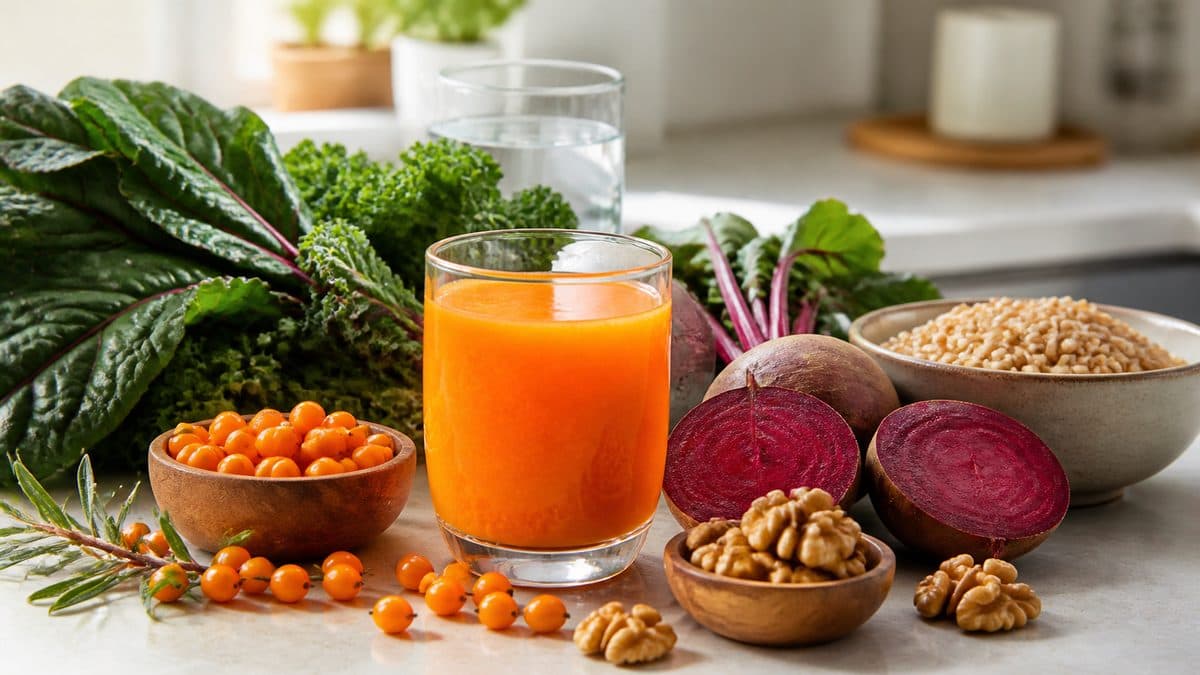
- What the plate looks like most days. Vegetables, fruit, whole grains, pulses and adequate protein. Consistency matters more than any one meal.
- How much fried and refined food is in the routine. Occasional is one thing. Daily is a different pattern.
- Sugar-sweetened drinks. Soft drinks and sweetened packaged juices add up quietly, mostly because liquid calories do not register as food.
- Alcohol. A well-known factor, and moderation is the standard advice everywhere.
- Sleep and movement. Both influence how the body handles what it takes in.
- Regular health checks. Especially if your doctor has asked you to keep an eye on anything.
A juice does not shift any of these. Anyone selling you a bottle that outperforms a decade of diet is not being straight with you.
The word detox, and why it is doing too much work
Detox appears on a lot of packaging and it means very little, which is worth unpacking properly. The body has its own systems for processing and clearing what it does not need, and the liver and kidneys are central to them. Those systems are not switched on by a drink.
What food genuinely does is supply nutrients. That is the whole mechanism, and it is enough of a reason to eat well without dressing it up. So a more honest way to think about any wellness juice is this: does it add useful nutrition to my week, and does it displace something worse? For a juice with no added sugar taken instead of a soft drink, the answer to both can be yes.
Where sea buckthorn fits
Sea buckthorn is a small orange berry from the cold, high-altitude regions of Ladakh, Himachal Pradesh and Spiti. Nutritionally it brings a fair amount into a small serving.
- A good source of Vitamin C, along with Vitamin E, carotenoids including beta-carotene, and flavonoids.
- One of very few plants containing Omega 3, 6, 7 and 9 together, and notably rich in Omega-7 (palmitoleic acid), which is rare in plants.
- Naturally low in sugar, which is unusual among fruit juices and is why the drink tastes so sharp.
It also has a long history of traditional use in Himalayan, Tibetan and Ayurvedic practice. That history is a reason to take the fruit seriously as a food. It is not a claim about treating anything, and it should not be read as one.
Our nutritional juices are made with no added sugar and no artificial colours, flavours or sweeteners, which is the specification that matters if the whole point is to keep the diet clean.
Using Sea Buckthorn juice in a daily routine
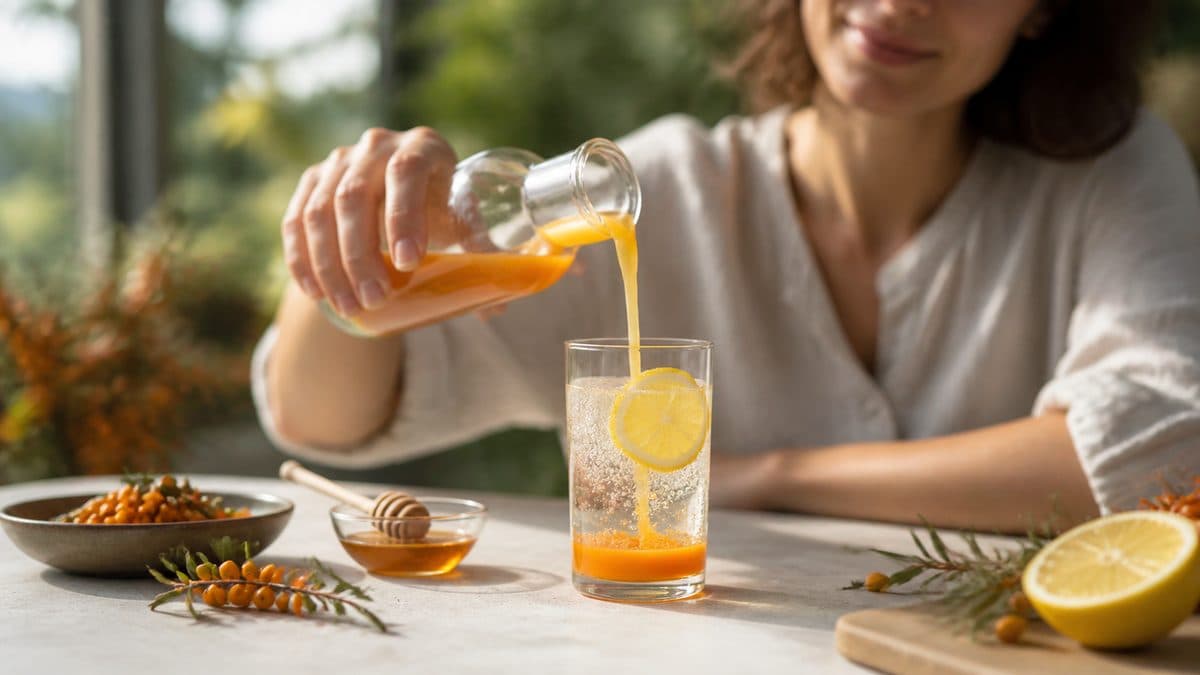
Biosash suggests around 10 ml morning and evening, mixed into water, roughly twenty minutes before meals. The juice is genuinely tangy, and that acidity is characteristic of the fruit rather than a flaw in the batch.
Some practical notes:
- Dilute generously in cool water. Under-dilution is the most common reason people give up in the first week.
- Keep it refrigerated after opening and shake before pouring.
- Take it at the same two moments daily, so it rides on an existing habit.
That two-a-day pattern is the same one we describe elsewhere, including in a woman's daily wellness routine, because it is simply the easiest rhythm to keep.
Products across the site are grouped by the routines people build them into, which is why sea buckthorn appears in the healthy liver section alongside other wellness categories. The grouping reflects how people organise their own shelf, not a claim about what the fruit does.
The line worth drawing
If you have been told anything about your liver by a doctor, that is a medical matter and it belongs with your doctor. Diet changes, supplements and anything new in your routine should be discussed with them, particularly if you are on regular medication. No food and no juice is a substitute for that conversation or for treatment.
Wrapping up
Liver wellness is built out of ordinary decisions repeated for years: what is on the plate, how much alcohol is around, whether you sleep and move, and whether you keep up with the checks your doctor asks for. A nutrient-dense, low-sugar juice like sea buckthorn is a reasonable small piece of that, and a pleasant one. Just keep it in proportion, because the boring habits are still where the real work happens.