Energy Drinks
Sea Buckthorn Juice for Bone Health: Beyond Calcium
02 Sept 2026 • Amisha Surana
Calcium gets nearly all the attention, but bone is not simply a mineral deposit. It is living tissue, built on a protein framework that mineral is packed into, and rebuilt continuously through life. That means the everyday nutrition supporting bone is broader than one mineral, and it is where a fruit like sea buckthorn earns a place on the list.
Worth saying plainly at the start: sea buckthorn is not a calcium supplement and does not pretend to be one. What it offers is a spread of nutrients, Vitamin C among them, that sit alongside calcium-rich foods in a varied diet.
Bone is more than the mineral in it
Think of bone as reinforced concrete rather than a lump of chalk. The steel in that comparison is collagen, a protein that forms a flexible mesh. The concrete is the mineral, largely calcium and phosphorus, packed into and around that mesh. Take away either part and the structure is not what it should be. Bone tissue is also broken down and rebuilt continuously, which is why it draws on the diet year after year rather than being finished once in childhood.
Because both halves of the structure depend on nutrition, a diet organised entirely around one mineral is an incomplete diet. Protein, a range of minerals and several vitamins all have roles, and they come from ordinary food.
Where Sea Buckthorn's Vitamin C comes into the picture
Vitamin C is one of the nutrients the body uses in the normal formation of collagen. Since collagen is the protein framework running through bone, skin, tendon and blood vessel walls, a steady dietary supply of Vitamin C matters for the everyday maintenance of all of them. It is the same reason the nutrient comes up again in questions about hair nutrition.
The body does not hold large reserves of Vitamin C, so it needs to arrive from food fairly regularly rather than in occasional bursts. Sea buckthorn is a good source of it, which is the main reason the berry comes up in conversations about bone nutrition at all. It is a contribution to daily intake, not a shortcut.
What else Sea Buckthorn brings to the diet
Sea buckthorn grows in cold, high-altitude places, in India largely across Ladakh, Himachal Pradesh and Spiti, which is why so many labels describe it as wild-harvested. The nutritional profile of the fruit is unusually broad for a berry:
- Vitamin C, in good quantity, as described above.
- Vitamin E, a fat-soluble vitamin found in far fewer fruits than people assume.
- Carotenoids, including beta-carotene, which give the berry its deep orange colour and which come up again in discussions of eye nutrition.
- Flavonoids, a family of plant compounds common in colourful fruit.
- Omega 3, 6, 7 and 9 together, which very few plants offer in one place. The Omega-7 content, palmitoleic acid, is particularly uncommon in the plant world.
It is also naturally low in sugar, which makes it easier to include daily than most fruit juices. You can see how it sits within our wider healthy bones selection, where the idea is nutritional support across a diet rather than one heroic ingredient.
What Sea Buckthorn does not do
No juice rebuilds a skeleton, and any brand suggesting otherwise is overselling. Sea buckthorn is not a source of meaningful calcium, it is not a replacement for anything your doctor has recommended, and it will not compensate for a diet short on protein and minerals. Treat it as one useful item in a broader pattern of eating. That framing is honest, and it is also the only framing that holds up.
Building a plate that supports bone
The food side
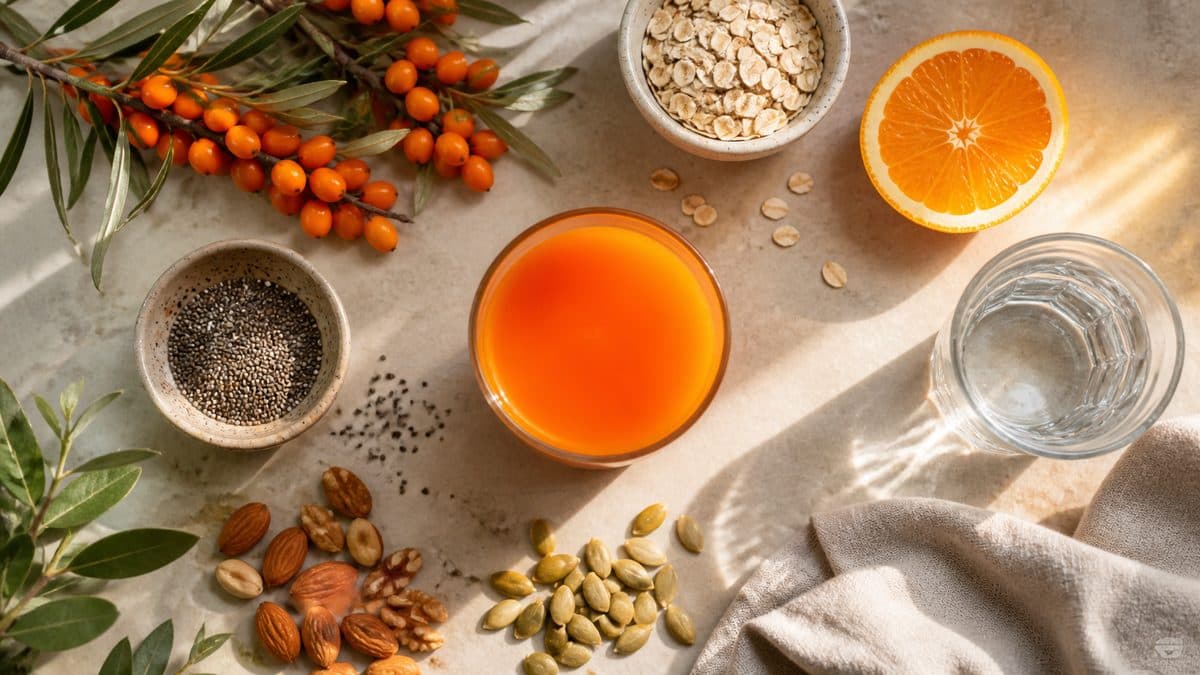
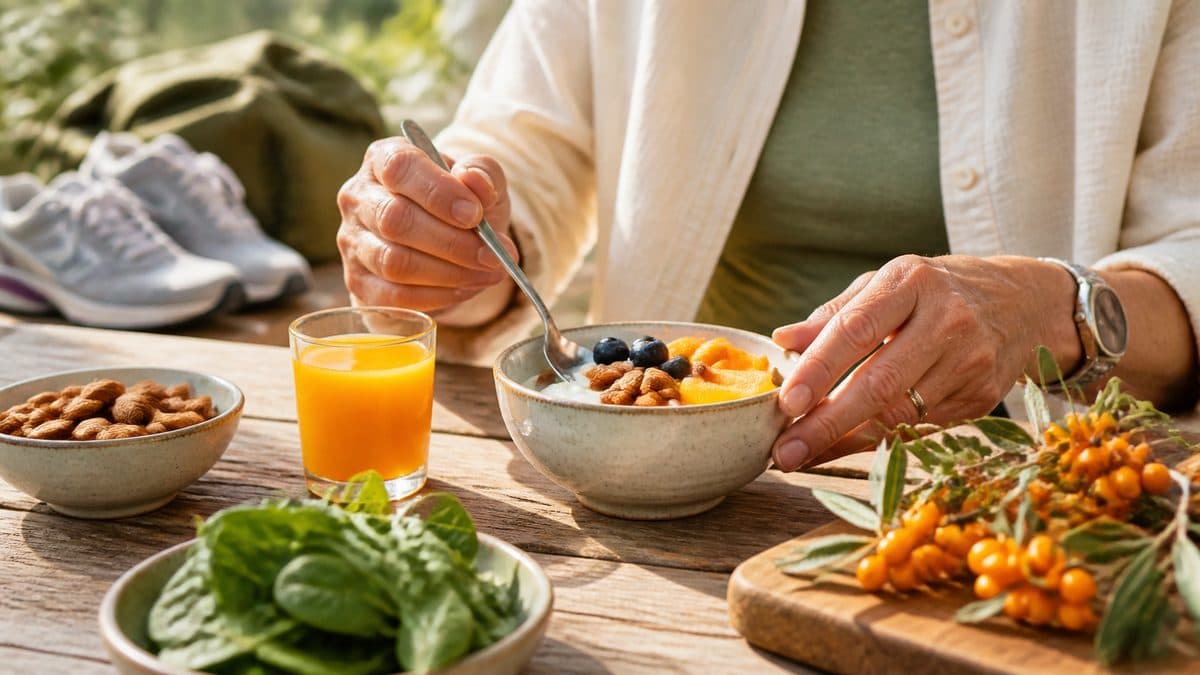
Indian kitchens are already well stocked for this. Milk, curd and paneer are the obvious calcium sources. Ragi is one of the richest grains for it, and til, rajma, green leafy vegetables, small fish eaten with the bones and almonds all contribute. Protein deserves attention too, since collagen is a protein: dal, eggs, curd, paneer, fish and chicken across the day do more than a single large serving at dinner. Colourful fruit and vegetables round out the vitamins, and sea buckthorn juice fits neatly into that column.
The rest of it
Bone responds to being used. Walking, climbing stairs, carrying your own shopping and any weight-bearing movement are part of the picture in a way no glass of juice can substitute for. Sunlight matters as well, since the body makes Vitamin D through skin exposure, and Vitamin D is bound up with how the body handles calcium. None of this is complicated. It is just easy to skip.
How people fit the juice in
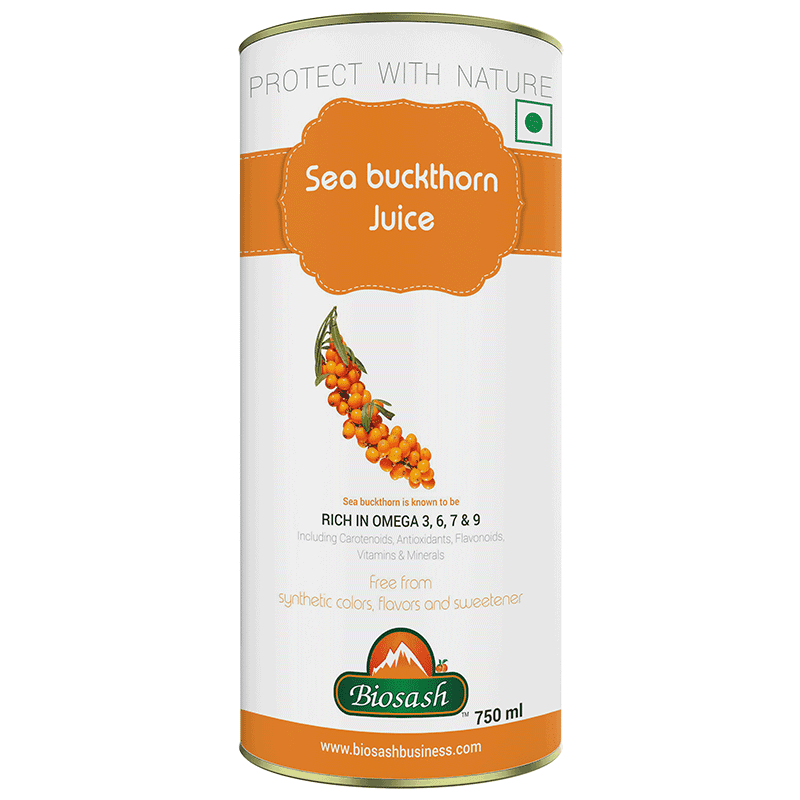
The usual pattern with Biosash juice is about 10 ml diluted in water, morning and evening, roughly twenty minutes before meals. Diluting it is not optional for most people, since the juice is sharply tart on its own. Consistency is the point: a modest glass taken daily for months does more than an enthusiastic fortnight. You will find the same approach across our other nutritional juices.
If you are already being treated for anything, or you take regular medication, mention the addition to your doctor. It is a one-minute conversation and it saves guesswork.
The short version: bone needs a framework as much as it needs mineral, and building that framework draws on a wider set of nutrients than calcium alone. Sea buckthorn contributes to that wider set. It works best understood as part of the diet, not as a substitute for it.