Energy Drinks
Sea Buckthorn Juice Price in India: What You're Really Paying For
07 Sept 2026 • Riddhi Jain
Sea buckthorn juice costs more than the fruit juices sitting next to it, and the reason is mostly agricultural rather than promotional. The berry grows on thorny bushes in cold, high-altitude country, in India largely across Ladakh, Himachal Pradesh and Spiti, it ripens in a short window, and it is picked by hand in places where machinery is of little use.
Price on its own tells you very little, though. A large bottle at a low price can be mostly water and apple juice concentrate. A smaller bottle at a higher price can be far closer to pure fruit. Here is what sits behind the number, and how to compare two bottles properly.
Why sea buckthorn is expensive to harvest
Sea buckthorn is not a plantation crop in the way oranges or apples are. It grows where the growing season is short and the winters are severe, on land that is difficult to reach and harder to farm. That alone limits how much fruit exists in any given year.
Harvesting is the real bottleneck. The branches are thorny, the berries are soft and burst easily, and they cling tightly to the stem, so picking is slow, careful work done by hand, which is what a wild-harvested label is really describing. The window when the fruit is ripe is narrow, which means labour has to be available exactly when the berries are, not before or after. Then the fruit has to come down from high altitude to a processing facility while it is still in good condition. Every one of those steps costs money before a single bottle is filled.
What happens after the harvest adds more
Once fruit reaches the plant, it has to be sorted, washed, pulped and separated. Turning that pulp into a juice that is stable in an Indian kitchen means careful handling and heat treatment, done in a way that does not wreck the taste or the colour. None of that is unusual for a food factory, but it is expensive at small volumes, and sea buckthorn is a small-volume crop.
Then there is the quality side. Manufacturing under WHO-GMP certification means the facility runs to a documented standard, with records, controls and audits behind it. Batch testing at a NABL-accredited laboratory means each production batch is checked rather than sampled once a year for a certificate to hang on the wall. Both are recurring costs, and both are invisible on the shelf, which is exactly why cheaper bottles can undercut on price without anyone noticing what was skipped.
How to compare two bottles fairly
Check how much of the bottle is actually sea buckthorn
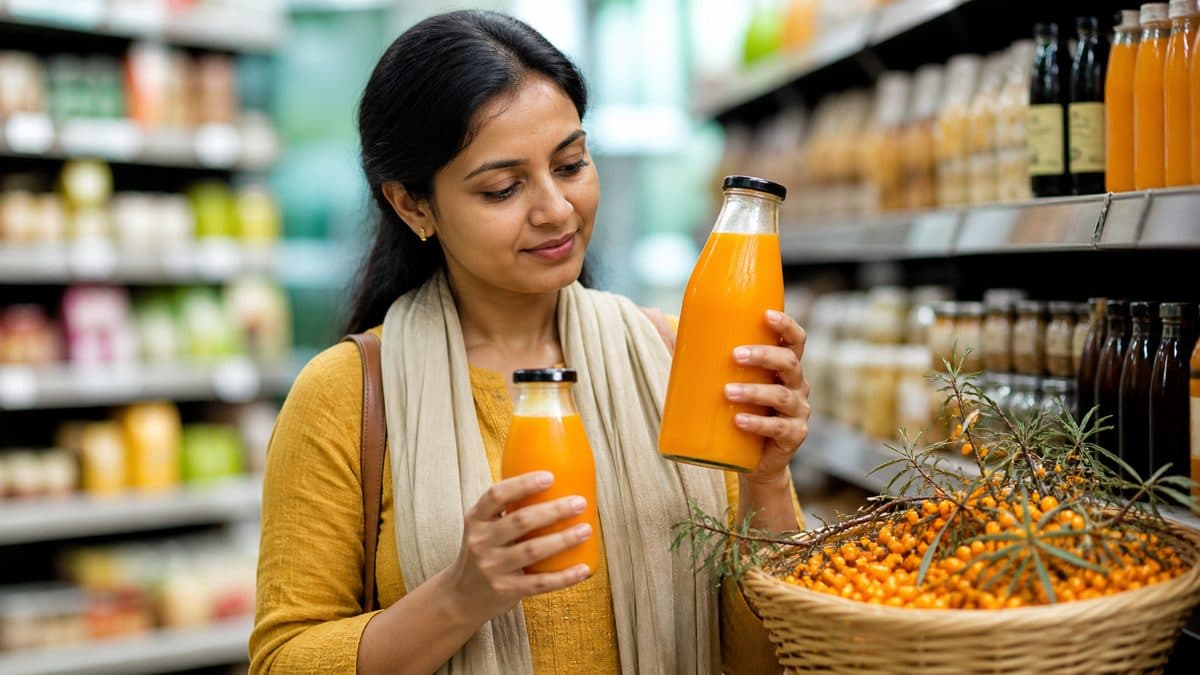
This is the single most useful thing on the label. Many products described as sea buckthorn juice are blends, with the berry making up a modest share and the rest being water, apple or grape juice concentrate. A blend is not automatically bad, but you should know you are buying one, and you should not pay pure-juice money for it. The same check sits at the centre of choosing a genuine brand.
Compare cost per serving, not per bottle
Bottle size is a poor guide. Sea buckthorn is usually taken in small measured servings rather than by the glass, because it is concentrated and quite acidic. Biosash's own stated usage is 10 ml twice a day mixed in water. A bottle used that way lasts very differently from a fruit juice you pour into a tumbler, so work out roughly what a day of use costs and compare that number between brands.
Read the rest of the ingredient list
Added sugar is the most common way to make a sour juice easy to sell cheaply. Artificial colour makes a diluted product look richer than it is. Sweeteners and flavours do similar work. Biosash juices carry no added sugar and no artificial colours, flavours or sweeteners, which also means the sourness stays where the fruit put it.
Pulling those checks together, this is what to actually look at while you are standing in front of the shelf:
| What to check | Why it matters | What a good label shows |
|---|---|---|
| Fruit content | Many bottles are blends, with the berry as a modest share | States clearly how much of the contents is sea buckthorn |
| Cost of a day's use | Bottle size flatters diluted products | Enough serving guidance to work the cost out yourself |
| Ingredient list | Sugar and concentrate make a sour juice cheap to sell | No added sugar, no artificial colours, flavours or sweeteners |
| Origin | Himalayan fruit and imported pulp are not the same thing | Names the region the berries came from |
| Testing | A one-off certificate says nothing about your bottle | Batch testing at a NABL-accredited laboratory |
| Manufacturing | Documented standards cost money to maintain | WHO-GMP certified manufacturing |
| Packaging | Light and heat are unkind to juice | Protective packaging with clear storage advice |
Why the cheapest bottles are cheap
There is usually a straightforward explanation, and it is worth knowing which one applies before you decide a low price is a bargain.
- Heavy dilution, with a small share of actual sea buckthorn
- Concentrate reconstituted with water rather than juice pressed from fruit
- Imported pulp of unclear origin instead of Himalayan fruit
- Sugar or concentrate doing the work of making it palatable
- No batch-level testing, because testing every batch costs money
- Basic packaging that lets in light and heat, which does the juice no favours
What you are paying for with Biosash
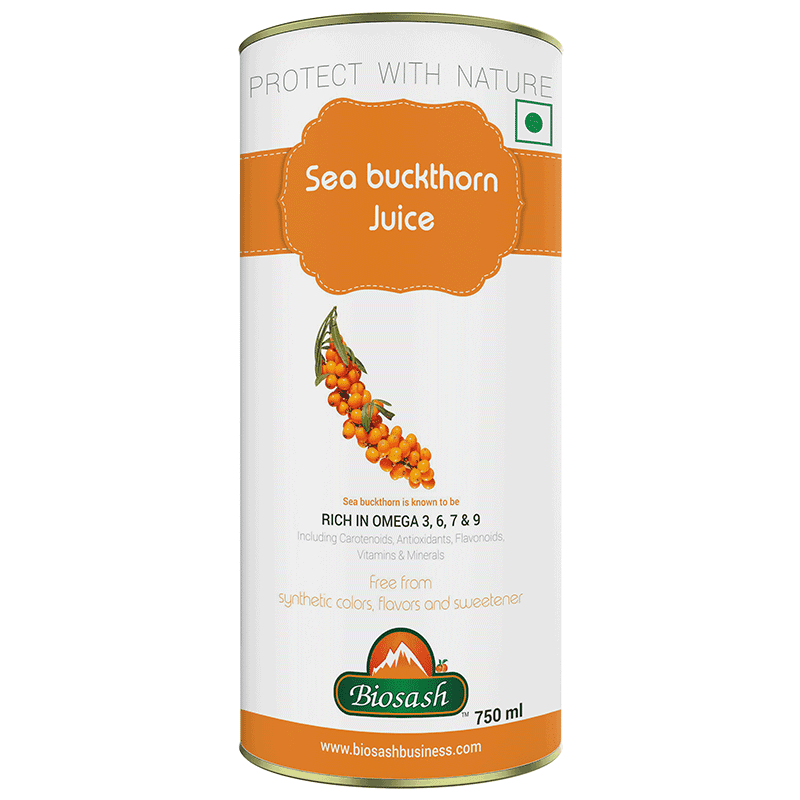
Our juices are made from Himalayan sea buckthorn, manufactured under WHO-GMP certified manufacturing, and batch tested at a NABL-accredited laboratory, with no added sugar and no artificial colours, flavours or sweeteners. Current prices sit on the product pages themselves, since they vary by pack size and by whatever is running at the time, and you can see the full set on our nutritional juices page. The wider nourishing section groups the same products by what people are browsing for.
Is it worth it for you?
That depends on how you will use it. Bought as a one-off because a bottle looked interesting, most wellness juices end up half-finished at the back of a fridge, and then any price is too high. Bought as a small daily habit, the cost per day is modest and the comparison is not against packaged fruit juice but against the other things you add to your routine, whether that is a green powder or an aloe vera juice.
Judge a sea buckthorn juice on the fruit content, the sourcing, the testing behind it and the cost of a day's use. Judge it on the bottle price alone and you will end up buying diluted juice at a discount, which is not really a saving.