
Energy Drinks
Sea Buckthorn Juice Side Effects: What to Know Before You Start
07 Sept 2026 • Riddhi Jain
Sea buckthorn juice is a fruit juice, and for most people it behaves like one. The thing first-time drinkers notice is usually not a side effect at all. It is the taste. The juice is sharply tangy and quite acidic, and that sourness catches people off guard when they expect something like a sweet packaged juice.
Where genuine discomfort does come up, it tends to trace back to three things: taking it undiluted, taking too much too soon, or taking it on a completely empty stomach when acidic foods do not agree with you. All three are easy to work around.
What "side effects" means for a food like sea buckthorn
Sea buckthorn has a long history of traditional use in Himalayan, Tibetan and Ayurvedic practice, and it is eaten and drunk as food, not taken as a drug. That is clearer once you know what the juice is and how it is made. It matters for how you read the question. Any food can disagree with a particular person. Some people cannot manage citrus, others react to peanuts, plenty find raw onion difficult. A berry juice is no different, and the sensible approach is the one you would take with any new food in the house.
So this is not a list of warnings so much as a list of things to plan for. Most people who find sea buckthorn juice uncomfortable have simply started in the wrong way.
Planning around the acidity of sea buckthorn juice
That tang comes from the berry itself and from its Vitamin C content, and it is characteristic rather than a fault. Still, an acidic drink taken neat is a lot for the mouth and stomach to meet at once.
Always dilute it
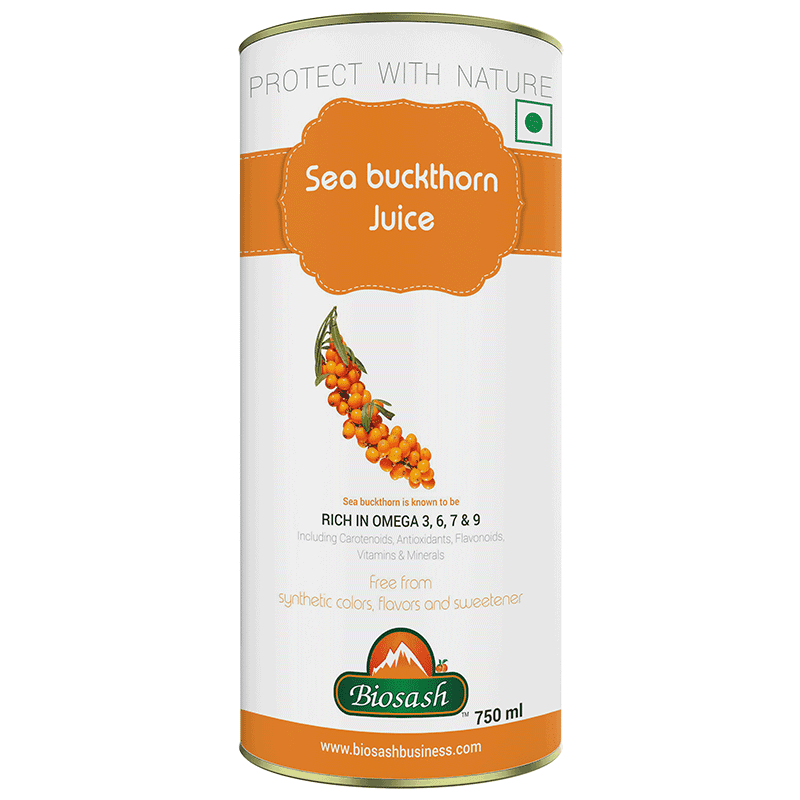
Mix the juice into water rather than drinking it straight from the cap. Biosash suggests 10 ml morning and evening, mixed in water, about twenty minutes before meals. Diluting also makes the flavour far more pleasant, which is the difference between a routine you keep and one you abandon in a week.
Time it around your meals
If acidic foods such as citrus, tamarind or tomato tend to feel uncomfortable for you, take the juice closer to a meal rather than long before one. Some people prefer it after breakfast entirely. There is nothing wrong with adjusting the timing to suit your own digestion.
Rinse your mouth afterwards
Acidic drinks of every kind, from lemon water to citrus juice, are worth rinsing away with plain water. It is a small habit that costs nothing and is generally recommended for anything tart.
Start small and build up
Beginning with a smaller quantity than the suggested serving, well diluted, is a reasonable way to introduce any new juice. Give it a few days before increasing. This does two things: it lets you notice how the juice suits you, and it stops you from associating sea buckthorn with a single unpleasant first glass. Anyone arriving from a milder daily drink often finds the jump surprising, which is part of what the comparison with wheatgrass juice covers.
Consistency also beats quantity. Taking a modest serving every day tends to sit better than an enthusiastic start followed by nothing. Our nutritional juices are meant to be part of a daily routine rather than something you drink in bursts.
Most first-week discomfort traces back to one of a few adjustable things:
| What to adjust | Why it comes up | What to try |
|---|---|---|
| Dilution | Neat juice is a lot for the mouth and stomach to meet at once | Mix it into a full glass of water rather than a splash |
| Quantity | An enthusiastic start is the usual reason people stop | Begin below the suggested serving and build up over days |
| Timing | Acidic drinks suit some empty stomachs and not others | Move it closer to a meal, or take it just after one |
| Temperature | Sourness reads sharper when the drink is warm | Serve it cold, straight from the fridge |
| After drinking | Tart drinks of every kind sit on the teeth | Rinse your mouth with plain water |
Allergy and individual sensitivity
Genuine allergy to sea buckthorn is uncommon, but no food is impossible to react to. If you have known fruit or berry allergies, or you tend to react to new foods, introduce it the way you would introduce anything else: a small amount, on its own, on a day when you have not also tried three other new things. If you notice itching, swelling, a rash or breathing discomfort after any food, stop and speak to a doctor.
Who should talk to a doctor first
Some situations call for a conversation with your own doctor before adding a new juice to your day, simply because they know your history and we do not:
- Pregnancy and breastfeeding
- Anyone taking regular prescribed medication
- Anyone under treatment for an ongoing condition
- Anyone with a history of food or fruit allergies
- Young children, where a doctor's guidance on quantity is sensible
- Anyone scheduled for a procedure, who should mention everything they take
Nothing here is a reason to stop, start or change any medicine you have been prescribed. That decision belongs with your doctor, not with a juice bottle.
Things people mistake for a side effect
A few normal features of an unsweetened, unfiltered juice get read as problems, and it is worth naming them.
- Sediment at the bottom. Natural settling in a juice with nothing added to hold it together. Shake before pouring.
- The sourness itself. Characteristic of the berry, not a sign the bottle has turned.
- Feeling full. If you have mixed the juice into a large glass of water, that is the water talking.
- Slight variation between bottles. Fruit is an agricultural product, and harvest and batch differences show up in taste.
What is not normal is a fermented smell, fizz, mould or a colour that has gone brown. That is a spoiled bottle and belongs in the sink.
Used sensibly, sea buckthorn juice is a straightforward daily drink, and it sits comfortably alongside the rest of our everyday energy range. Dilute it, start small, keep it in the fridge once opened, and pay attention to how your own body responds. That is really the whole of it.