Health and Wellness
Why Sea Buckthorn Is Called Sanjeevani Booti
08 Sept 2026 • Amisha Surana
In Ladakh, sea buckthorn is often called Sanjeevani Booti — the life-restoring herb of the Ramayana, the one Hanuman was sent to the Himalaya to find. It is a striking name for a small orange berry, and it is worth understanding what it does and does not mean.
It is a folk name, not a botanical or medical one. But folk names usually earn themselves, and this one is easy enough to trace.
The story behind the name
In the Ramayana, Lakshmana is gravely wounded and Hanuman is sent to a Himalayan peak to bring back Sanjeevani, a herb said to restore life. Unable to identify it among so many plants, he carries back the entire mountain.
The epic never names a species, and no serious reading claims it did. What the story left behind was a category: a Himalayan plant of unusual restorative reputation. Over centuries, several plants in the high Himalaya have carried the name locally. In Ladakh, sea buckthorn is the one that stuck.
Why this plant, and not another
Three things made sea buckthorn the natural candidate in Ladakh.
It grows where nothing else does
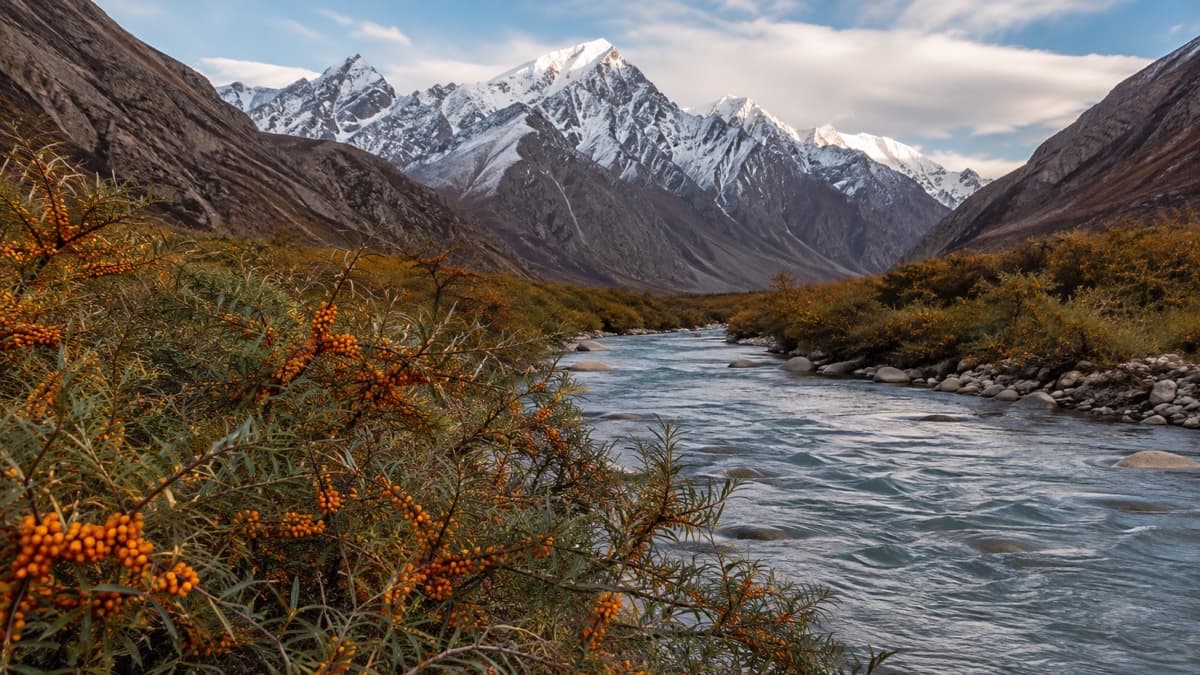
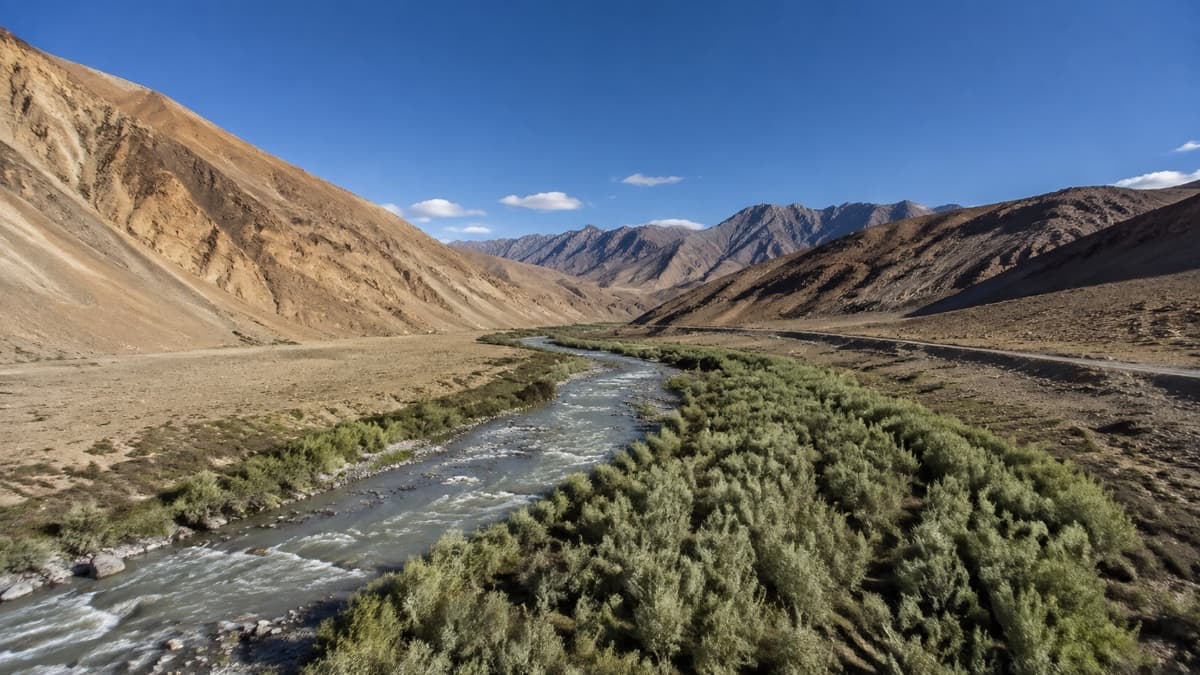
Ladakh is a cold desert. Along the rivers, sea buckthorn is frequently the only substantial green thing in sight. A plant that thrives where everything else fails acquires a reputation without needing any help.
It was genuinely useful
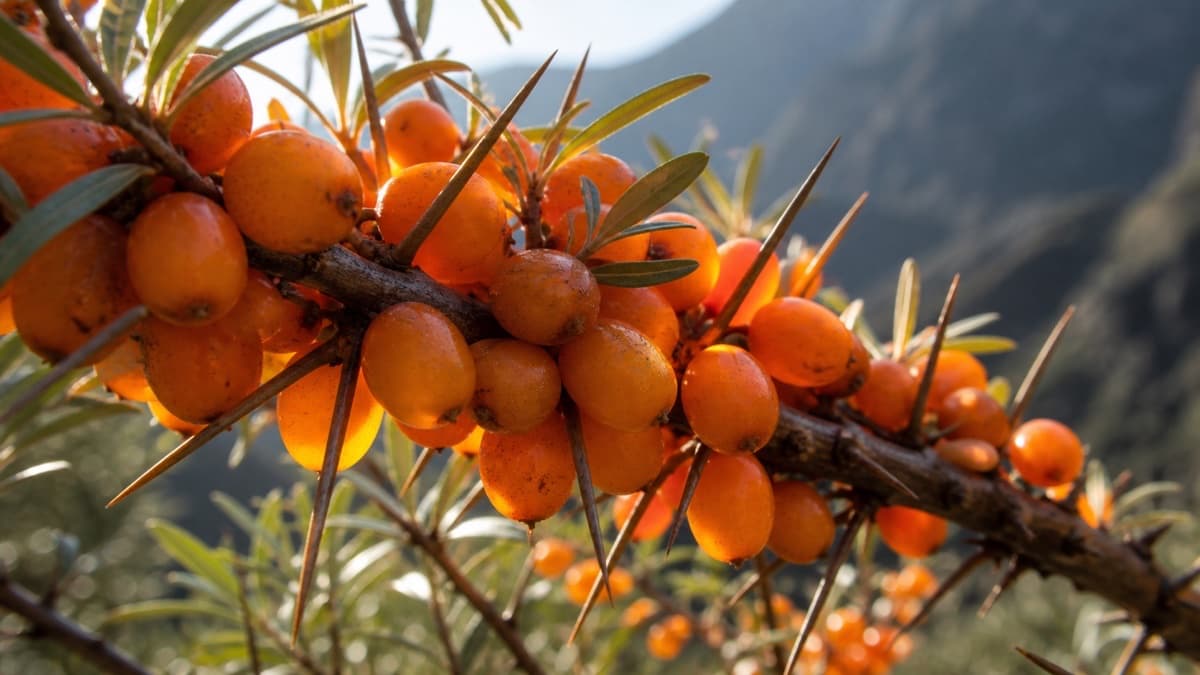
Long before anyone bottled it, Ladakhi households used the fruit as food and juice, the leaves as tea, and the plant as fodder, fuel and fencing. In a place where the growing season is short and supplies are limited, something that yields through winter is not a curiosity — it is infrastructure.
It is unusually dense
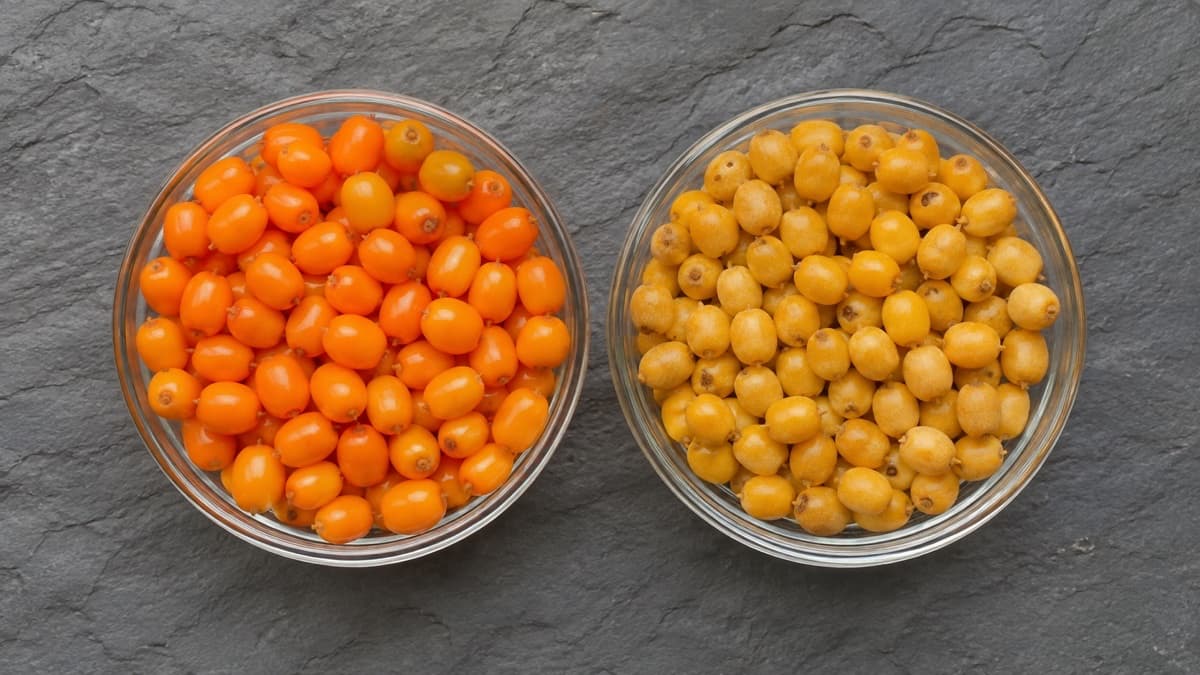
The berry carries vitamin C, carotenoids, a range of antioxidants, and an uncommon fatty acid profile that includes Omega 7 alongside Omega 3, 6 and 9. If you want to understand why that combination is unusual in the plant world, Omega 7 is the part worth reading about.
The other names it carries
Sea buckthorn collects names. In India it is widely sold as Leh Berry, after the town most associated with it — a brand name that slid into general use. Ladakhi has its own local names for it. Tibetan medicine has used it for centuries.
Its botanical name carries a story too. Hippophae rhamnoides comes from the Greek for horse and shining, from the observation that horses fed on it developed noticeably glossy coats. Different culture, same conclusion, arrived at independently.
A name is not a medical claim
This is where care is owed to the reader.
Sanjeevani Booti is a cultural name reflecting how the plant has been regarded, not a statement that it treats or cures anything. Sea buckthorn is a nutrient-dense food with a genuinely interesting composition, and it is being studied seriously. It is not a medicine and should not be described as one.
If you are managing a health condition, taking prescribed medication, pregnant or nursing, speak to your doctor before adding anything new — sea buckthorn included.
The name is now official, in a sense
In August 2026, the Union Ministry of Agriculture and Farmers Welfare constituted a committee, through the Indian Council of Agricultural Research, to examine a proposed National Sanjeevani Research Centre for sea buckthorn in Nubra Valley.
A folk name has made its way into the title of a proposed national institution. Whatever the committee concludes, that is a quiet mark of how seriously this berry is now being taken.
What we take from it
We do not use the name in our marketing, because a name is not evidence. What is evidence is where the fruit grew, how it was processed and whether the batch was tested.
Our sea buckthorn comes from Ladakh, with organic certification held since 1993, WHO-GMP certified manufacturing and NABL-accredited batch testing. If you would like the fuller picture of the plant itself, start here.