Healthy Skin and Body
Drinking for Your Skin: Does Sea Buckthorn Juice Beat Topical Serums?
06 Sept 2026 • Riddhi Jain
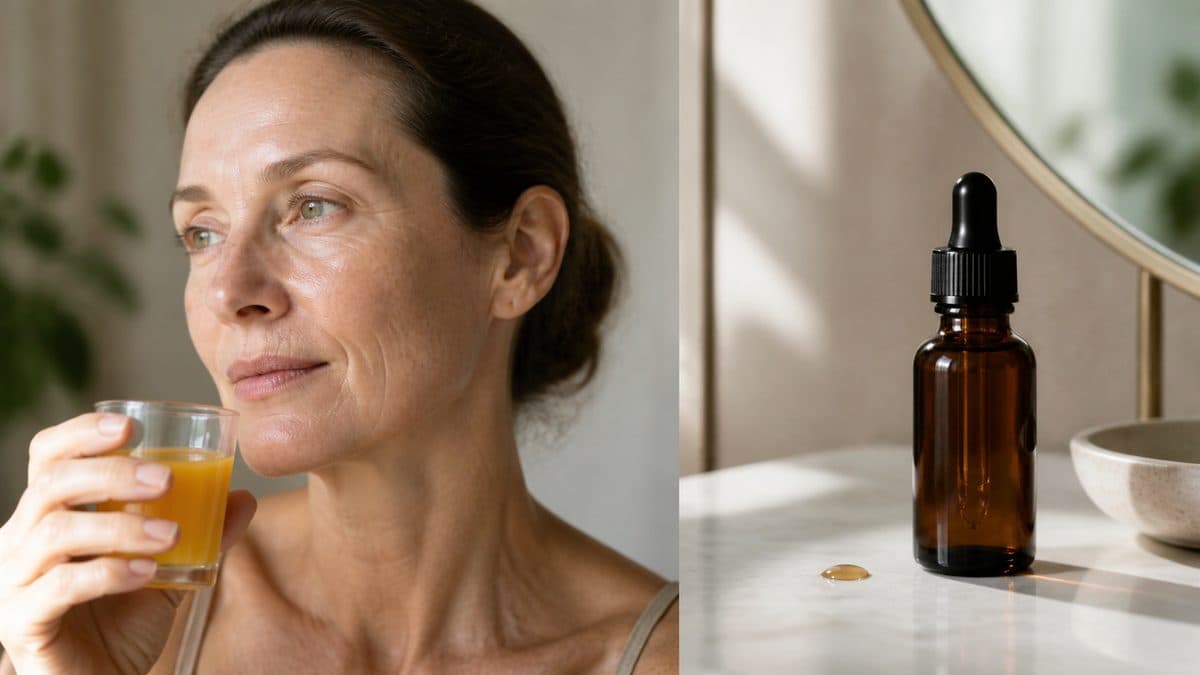
Neither one beats the other, because they are not doing the same job. Drinking sea buckthorn juice supplies nutrients your body distributes according to its own priorities. A topical serum puts oils and actives directly onto the outer layer of skin, where they act locally and fairly quickly.
The interesting question is not which wins. It is what each approach is genuinely good at, and where people waste time expecting one to do the other's work.
What skin is made from, and where that comes from
Skin is a living organ that rebuilds itself continuously, and it builds from what the body has available. Protein, fatty acids and a range of vitamins and minerals all go into that process. Vitamin C, for instance, is used by the body in making collagen, the protein that gives skin its structure. Fatty acids are used in the membranes of cells and in the barrier that keeps moisture in.
Sea buckthorn is relevant here because of what it carries: vitamin C, vitamin E, carotenoids, flavonoids, and the unusual combination of Omega 3, 6, 7 and 9 together. Its Omega-7 content stands out, since palmitoleic acid is uncommon in plants, and it is a fatty acid the body uses in maintaining skin and mucous membranes. That is the reason Omega-7 comes up so often in conversations about sea buckthorn and skin.
What topical products do well
They act where you put them
A serum, oil or cream works on a specific patch of skin. That is a genuine advantage. If your hands are dry from washing or your face feels tight after a windy commute, something applied directly gives you comfort within minutes. Nothing you drink will behave that fast or that locally.
They manage the barrier
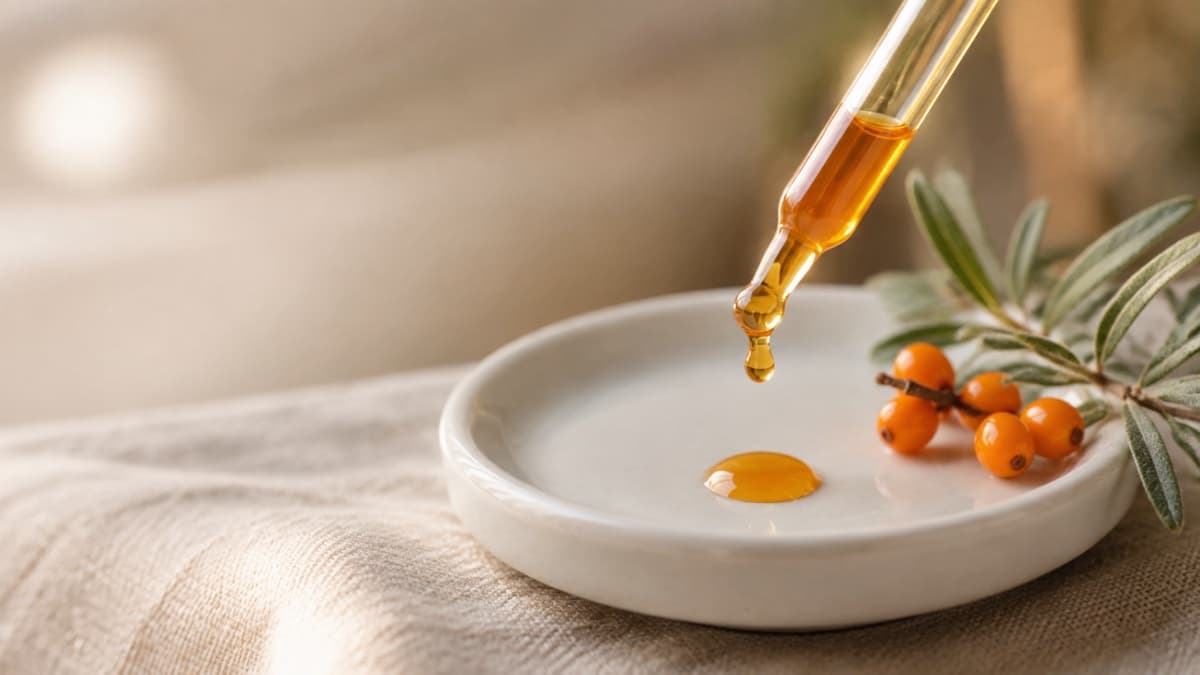
A lot of what topical skincare does is barrier work: reducing water loss, smoothing the surface, adding a layer of oil where the skin's own supply is not keeping up. Sea buckthorn oil is used in face care formulations precisely because of its fatty acid profile and its carotenoid content, which also gives it a deep orange colour that formulators have to work around.
What drinking Sea Buckthorn juice does that a serum cannot
Nutrition reaches skin everywhere, including the parts nobody applies anything to. It also reaches skin from beneath, feeding the layer where new cells are actually being made rather than the layer that is on its way out. And it is not limited to skin. The same nutrients go wherever else the body needs them.
The trade-off is control. You cannot direct a nutrient to your cheekbones. The body decides, and it does not consult you. This is why nutritional changes tend to show up gradually and across the board, while a good moisturiser shows up on the spot the same evening.
Set side by side, the two approaches divide up fairly cleanly:
| Drinking the juice | Applying something topical | |
|---|---|---|
| Where it acts | From the inside, wherever the body sends nutrients | On the patch of skin you apply it to |
| How targeted it is | Not targeted; the body sets the priorities | Precisely targeted by you |
| What it supplies | Raw material the body builds with | Oils and actives that work on the surface |
| How quickly you notice | Gradually, on the skin's own renewal cycle | Quickly, often the same evening |
| What happens when you stop | Fades slowly, as the rest of the diet does | Surface comfort fades quickly |
| A fair way to judge it | Over months, alongside sleep and diet | Over days |
Using both, without overcomplicating it
Most people who are happy with their skin are doing a handful of dull things consistently. A workable version looks roughly like this:
- Eat enough protein and enough healthy fat. Very low fat eating shows on skin before it shows anywhere else.
- Include a regular source of vitamin C rather than an occasional large dose.
- Drink water through the day instead of a litre at night.
- Apply something to damp skin after a bath, when it holds moisture best.
- Use sun protection, which does more for how skin ages than any serum.
- Sleep properly, because repair work happens then.
Biosash groups its options for this under skin and beauty and, for people thinking about how skin changes over time, an anti ageing collection. Both include topical products and things you drink, which reflects the point of this article reasonably well.
Timelines: the part nobody enjoys
Topical results are quick but shallow. Surface comfort, softness and a smoother look can arrive within a day or two, and they fade just as fast if you stop.
Nutritional changes work on the skin's own renewal cycle, which takes weeks, not days. That is also why the antioxidant side of the story is best judged over a long stretch rather than a short one. That is the honest answer to how long before I see something. If you drink a juice for four days and conclude it did nothing, you have not really tested it. If you drink it for a couple of months alongside decent sleep and sensible sun habits, you are giving it a fair run.
Skin also reflects things that have nothing to do with either approach: illness, stress, medication, hormonal shifts, seasons. If something changes suddenly or persistently, that is worth raising with a doctor rather than solving from a shelf.
How Sea Buckthorn juice is usually taken
Sea buckthorn juice is naturally tangy and quite acidic, which surprises people the first time. It is also a different product from the oil, and the two are worth telling apart before you buy either. The typical Biosash usage is about 10 ml in the morning and 10 ml in the evening, mixed in water, roughly twenty minutes before meals. Diluting generously makes it far easier to drink, and the berry is naturally low in sugar, so nothing is being sweetened to cover the sourness. Biosash juices contain no added sugar and no artificial colours, flavours or sweeteners.
So, does drinking beat topical? No, and the framing is the problem. One feeds the tissue, the other looks after the surface. Doing both, consistently and without expecting miracles from either, is the version that actually holds up over time.