Healthy Skin and Body
Is Sea Buckthorn Oil Good for Acne-Prone Skin?
12 Sept 2026 • Amisha Surana
Sea buckthorn oil is used in skincare for oily and acne-prone skin, and there is a reasonable case for it. There is also a real risk of using it badly, which is where most disappointment with facial oils comes from.
Here is what the oil is, what it is reasonably said to do, and how to use it without making things worse.
Why an oil on oily skin is not a contradiction
The instinct is to strip oily skin dry. In practice, aggressive cleansing often prompts skin to produce more oil, not less, and a stripped barrier is an irritated one.
Lightweight plant oils used sparingly can support the skin barrier without the heaviness people fear. This is a well-established idea in skincare rather than anything specific to sea buckthorn.
What sea buckthorn oil brings
An unusual fatty acid profile
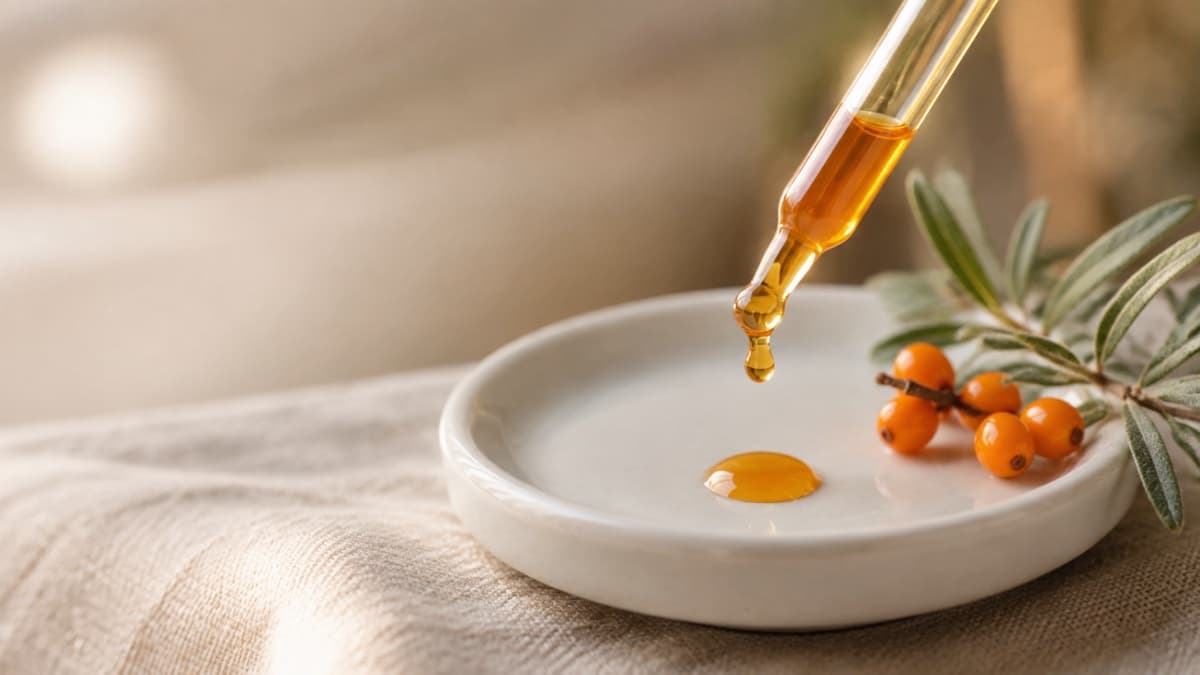
Sea buckthorn is one of very few plants carrying Omega 3, 6, 7 and 9. Omega 7 in particular is associated with skin and mucous membrane research, and it is genuinely uncommon in the plant world.
Carotenoids
These give the oil its deep orange colour — which is also why it must be used sparingly, as it can temporarily tint the skin.
Antioxidants
Sea buckthorn is dense in them, which is the general argument for it in skincare.
Berry oil and seed oil are different
Worth knowing before you buy. Seed oil is lighter and higher in Omega 3. Berry or pulp oil is thicker, deeper orange and where most of the Omega 7 sits. For facial use on oily skin, the lighter option is usually the easier starting point.
How to use it without regretting it
Very little
One or two drops for the whole face. This is not an oil you apply generously, and most bad experiences come from using too much.
Dilute it
Mixing a drop into a moisturiser you already use is gentler than applying it neat, and reduces the tinting.
At night
The colour is real. Night use avoids the question entirely.
Patch test
Always, on any new oil, on a small area for a couple of days before putting it on your face. This is not a formality — acne-prone skin reacts.
Being honest about acne
Acne is a medical condition with hormonal, bacterial and inflammatory components. No plant oil treats it, and anyone claiming a facial oil clears acne is overstating what is known.
If your acne is persistent, painful, cystic or scarring, see a dermatologist. There are treatments that work well, and months spent on oils instead is time that leaves marks.
Stop if it does not suit you
If you break out more, if skin feels congested, or if there is irritation, stop. Skin is individual and no ingredient suits everyone.
If you want the wider picture of the oil itself, oil versus juice explains how the two differ.
This article is general information about skincare, not medical advice.