Natural Supplements
Sea Buckthorn with Turmeric: Why the Combination Makes Sense
12 Sept 2026 • Riddhi Jain
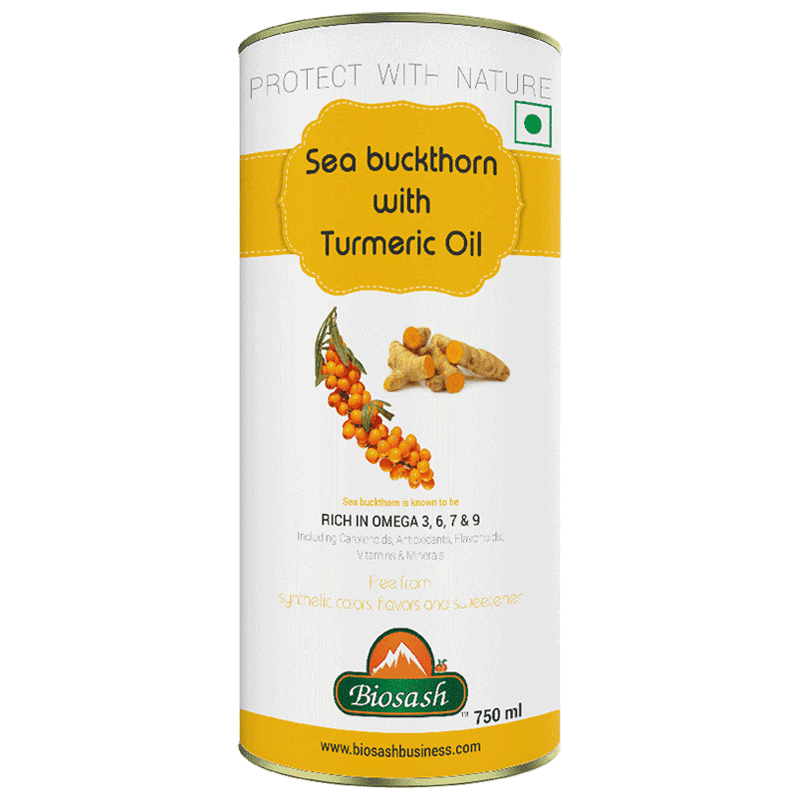
Sea buckthorn and turmeric get blended together because they cover different ground. One is a tart Himalayan berry with an unusual fatty acid and vitamin profile. The other is a root that has been in Indian kitchens and in Ayurvedic practice for centuries.
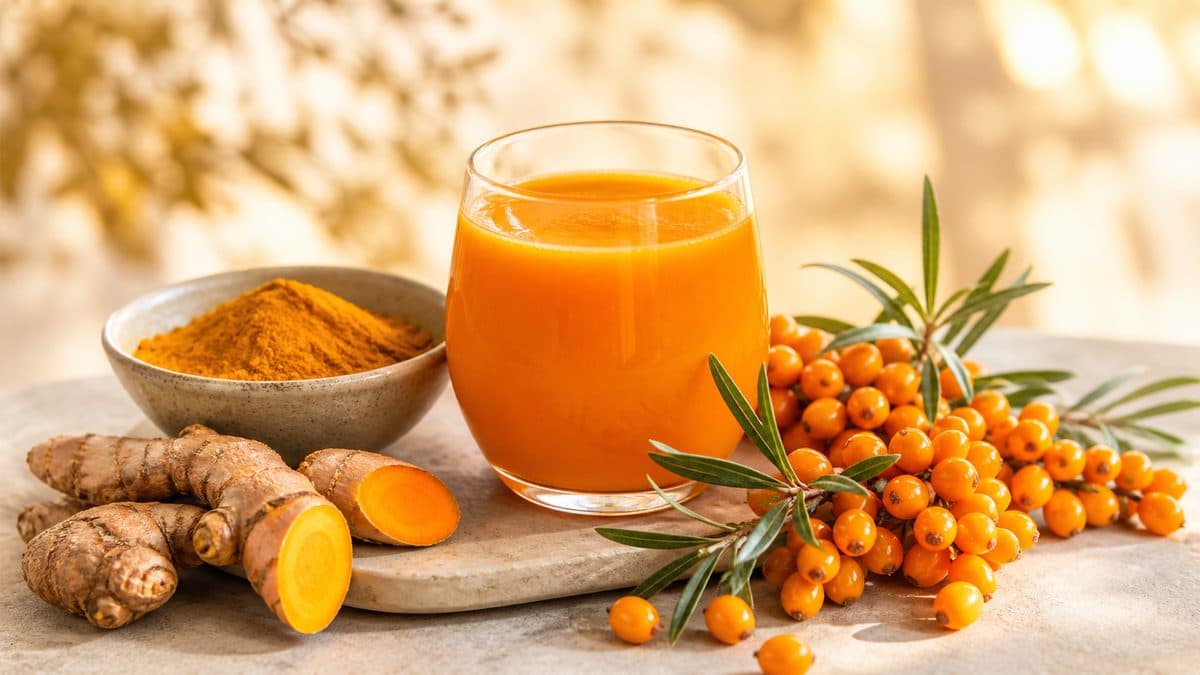
The pairing makes sense for a simple reason: the two ingredients are not duplicates of each other. Sea buckthorn brings fruit nutrients and fats. Turmeric brings its own compounds, its colour and a warm, earthy flavour that takes some of the edge off the berry's sharpness.
What Sea Buckthorn and turmeric each bring
Sea Buckthorn
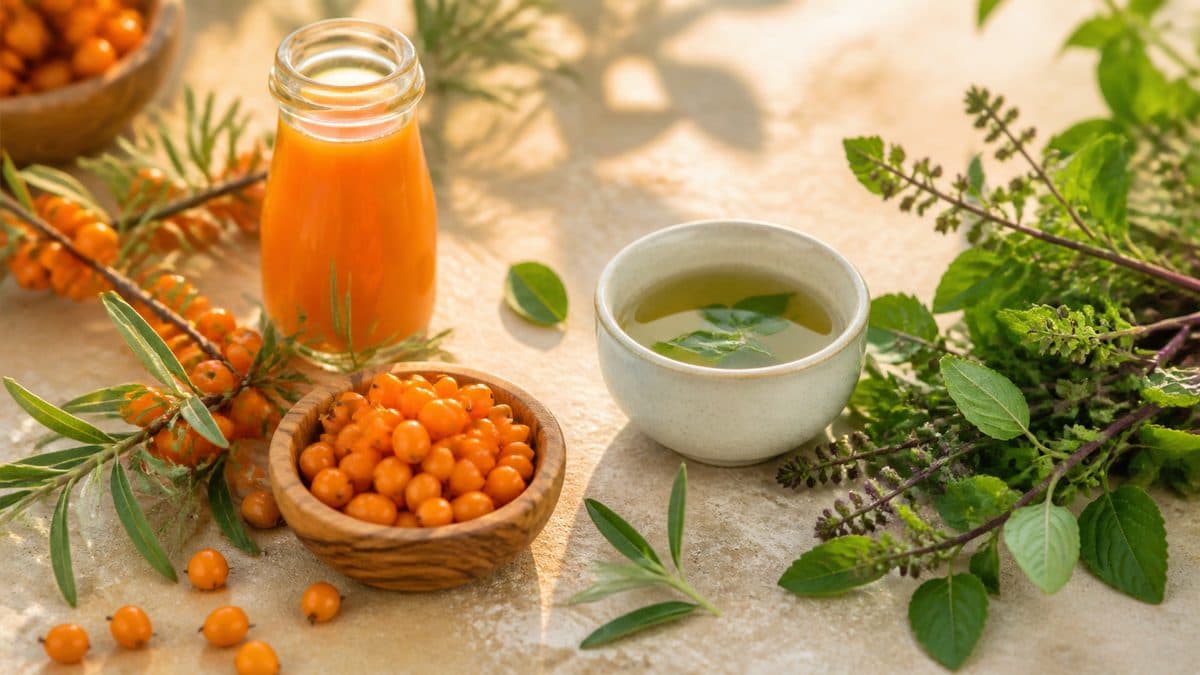
Sea buckthorn grows in cold, high-altitude places, largely Ladakh, Himachal Pradesh and Spiti within India. Nutritionally it is one of very few plants carrying Omega 3, 6, 7 and 9 together, and it is notably rich in Omega-7, or palmitoleic acid, which is uncommon in the plant world. It is a good source of Vitamin C and also contains Vitamin E, carotenoids including beta-carotene, and flavonoids, the compounds behind its antioxidant profile. It is naturally low in sugar, and the juice is decidedly sour.
Turmeric
Turmeric is the dried rhizome of a plant in the ginger family, and almost every Indian household already has it. The deep yellow comes from its curcuminoids, the pigment compounds that also stain your fingers and your kitchen counter. Traditionally it goes into the tempering at the start of a dish, into pastes applied on skin, and into warm milk at night. The flavour is earthy with a slight bitterness behind it.
Why the two work together
Curcuminoids are fat-soluble rather than water-soluble. That is the practical reason turmeric has traditionally been cooked into ghee or oil, or stirred into milk, instead of being taken with plain water. It dissolves and disperses better with fat around it.
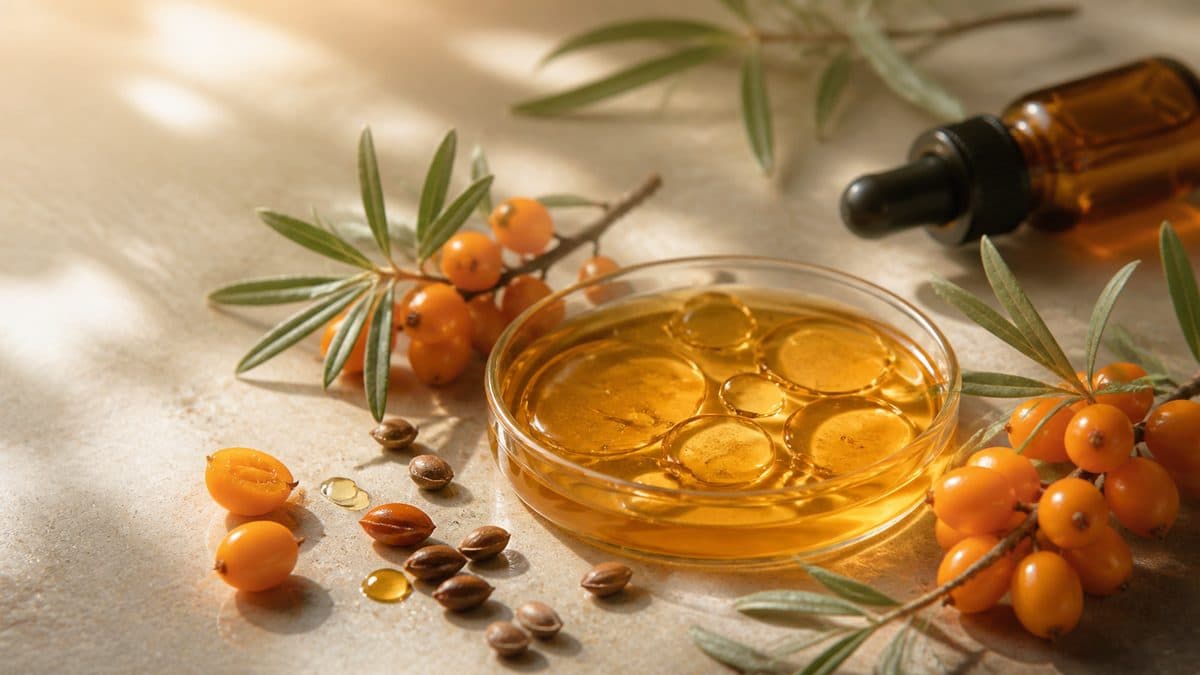
Sea buckthorn happens to be a fruit that carries fatty acids, which is what makes it an interesting base rather than an arbitrary one. It is a sensible pairing on those grounds, and that is how the combination is best understood: a reasonable formulation choice, not a magic trick. The same reasoning sits behind pairing the berry with moringa, where each ingredient covers ground the other does not.
There is a second, less technical reason. Sourness and earthiness balance each other. Sea buckthorn on its own is bracingly tart, and turmeric on its own is bitter and slightly dusty. Together they land somewhere more drinkable than either one alone.
What Sea Buckthorn with turmeric tastes like
Expect a tangy first hit, then a warm, slightly peppery finish. It is not a sweet drink and it is not trying to be. The blends in the nutritional juices range are built around the fruit's own flavour rather than around added sweetness, which means anyone expecting a mango-style juice will be surprised the first time.
Most people find that the second week is easier than the first. Palates adjust faster than you would expect, and the sourness starts to read as refreshing rather than aggressive.
How to take it
Biosash's stated usage for its juices is about 10 ml in the morning and 10 ml in the evening, mixed into water, roughly twenty minutes before meals. A few practical notes that make the routine easier:
- Use a full glass of water. Under-diluting is the most common reason people give up on it.
- Slightly warm water suits a turmeric blend better than very cold water, and it helps the aroma come through.
- Shake the bottle before pouring. Turmeric settles, and so do the fruit solids.
- Refrigerate after opening, and keep the cap clean, since turmeric will stain anything it touches.
- More is not better. Doubling the serving because you missed a day achieves nothing useful.
If you are pregnant, or on regular medication of any kind, have a quick word with your doctor before adding a new supplement to your routine. That applies to any concentrated ingredient, not just this one.
Where the blend fits in a routine
People reach for turmeric blends for fairly ordinary reasons. Some want the familiarity of an ingredient their family has always used, in a form that does not require cooking. Turmeric also turns up alongside other traditional ingredients in blends such as turmeric, guggul and sea buckthorn, which is the same idea taken a step further. Some are already drinking sea buckthorn and want a version with more flavour depth. Others simply prefer a warm-tasting drink in the mornings.
On the Biosash site, products with this kind of profile are browsable under both the anti ageing and healthy joints headings. Those are catalogue sections meant to help you find things, not claims about what a bottle will do for you. It is worth being clear about that, because wellness category names are easy to over-read.
What to check on the label
Blended juices vary a great deal, so the ingredient list is the only honest guide. A few things worth looking at:
- Where sea buckthorn sits in the ingredient order, and whether it is the base or a minor addition.
- Whether sugar, sweeteners, artificial colours or flavours appear anywhere on the list. Biosash juices are made without any of these.
- Manufacturing and testing detail. Biosash manufactures under WHO-GMP certified conditions with batch testing at a NABL-accredited laboratory.
- Sourcing of the berry, since sea buckthorn from the Himalayan belt is the variety with the longest traditional use in India.
The takeaway
Sea buckthorn with turmeric is a combination with a real logic behind it: two ingredients from different families, one fat-carrying and tart, the other pigment-rich and earthy, that together taste better and read more usefully than either does on its own. Treat it as a pleasant addition to a diet that is already reasonably varied, and it earns its place.