
Natural Supplements
Turmeric, Guggul and Sea Buckthorn: Ayurvedic Herbs for Active Joints
14 Sept 2026 • Amisha Surana
Turmeric, guggul and sea buckthorn all appear in traditional Indian wellness routines built around staying active, and each is there for a different reason. Turmeric comes from the kitchen, guggul from classical Ayurvedic formulation, and sea buckthorn from Himalayan and Tibetan practice.
This piece looks at what these three actually are, how they have traditionally been used, and the everyday nutrition and movement habits that sit alongside them. If you have a specific joint complaint, that belongs with your doctor, not with an article.
Turmeric: the one already in your kitchen
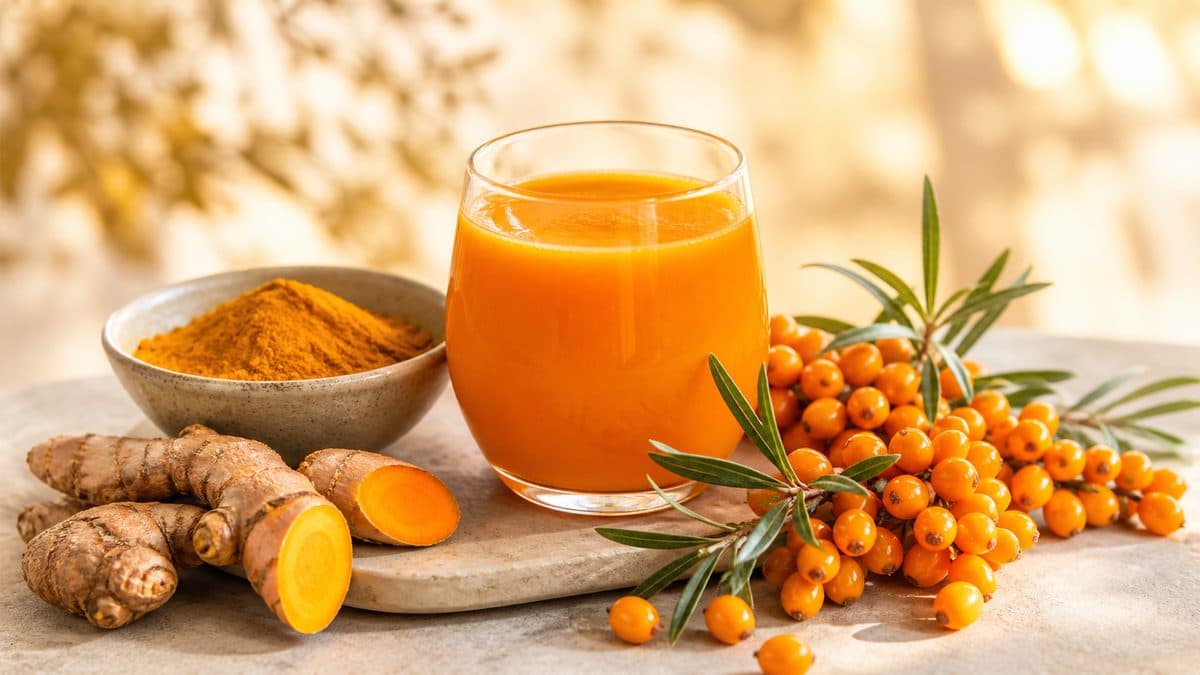
Turmeric is the most familiar of the three, and the easiest to include, because it is already in most Indian cooking. Its yellow colour comes from curcuminoids, and it has been used in Indian households for cooking and in traditional preparations for a very long time. Haldi doodh is the version everybody knows, and it survives as a habit because it is warm, cheap and pleasant.
Two practical points about it. Curcuminoids are fat soluble, which is why turmeric traditionally goes into hot oil or ghee at the start of a dish rather than being stirred into a finished one. And the classic pairing with black pepper is not folklore for its own sake; the two have been used together in Indian cooking for generations. Beyond that, treat turmeric as a daily culinary ingredient rather than something you take in a burst. It also sits easily next to the berry, which is why the two are so often paired in a single routine.
Guggul: the Ayurvedic resin
Guggul is the gum resin of the Commiphora mukul tree, which grows in the dry regions of western India. It has a long documented history in Ayurvedic practice, where it is rarely used alone and almost always appears within a compounded formulation combined with other herbs.
That last point matters. Guggul is a traditional preparation with its own conventions around processing and combination, and it is not a kitchen ingredient like turmeric. If you are interested in it, look at properly made formulations from the herbal supplements and Ayurveda range rather than sourcing raw resin, and speak to a qualified practitioner or your own doctor first, particularly if you take any regular medication.
Sea Buckthorn: nutrition rather than tradition alone
Sea buckthorn is the newcomer to most Indian shelves, though not to the Himalayas, where it has been used for a very long time in local, Tibetan and Ayurvedic practice. Its interest here is mostly nutritional.
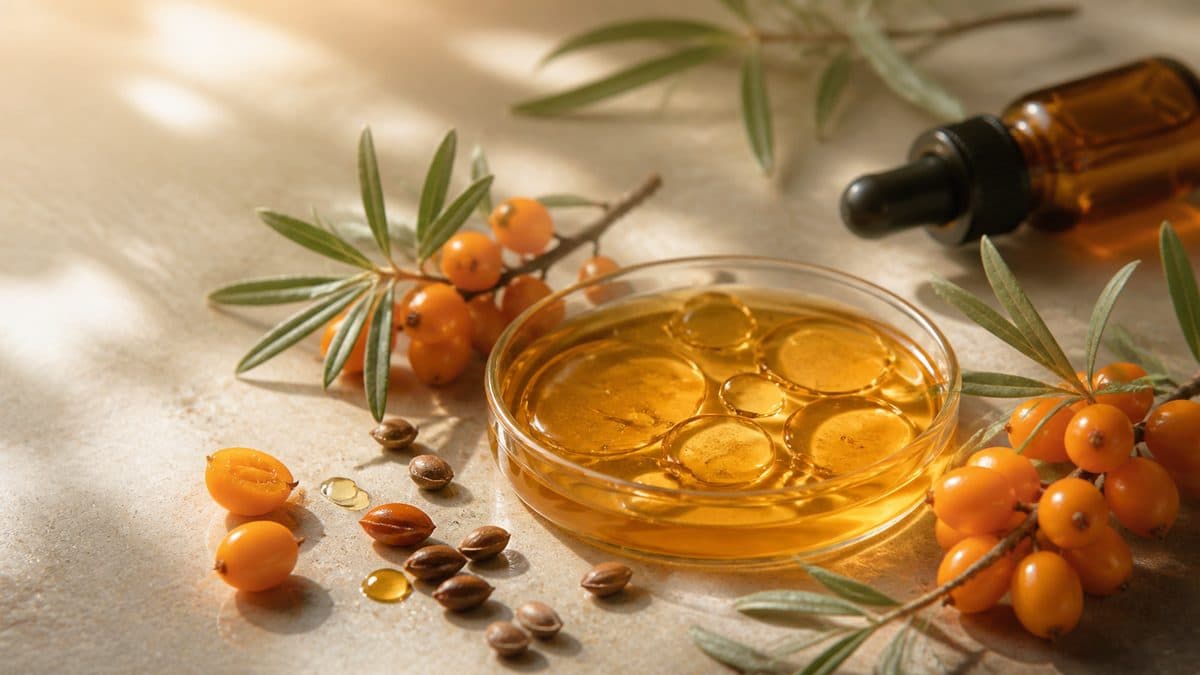
The berry is one of very few plant sources that contain Omega 3, 6, 7 and 9 together, and it is notably rich in Omega-7. It is a good source of vitamin C, and also contains vitamin E, carotenoids and flavonoids. The vitamin C element is worth noting for anyone thinking about staying active and eating for it, since the body uses vitamin C in making collagen, the protein that forms the structure of connective tissue throughout the body. That is nutrition supplying raw material, which is a very different claim from anything therapeutic.
The habits that do the heavy lifting
Herbs and nutrients are a small part of staying comfortably mobile day to day. The larger part is unglamorous and daily:
- Move often. Long unbroken sitting is harder on the body than most people expect, so break it up every half hour or so.
- Walk regularly. It is the most sustainable form of movement for the largest number of people.
- Include some resistance work. Muscle around a joint does real work in supporting it.
- Warm up before anything demanding, and give yourself time to cool down afterwards.
- Keep up your protein intake, especially as you get older.
- Get enough sleep, since that is when repair happens.
- Stay hydrated through the day rather than in one go.
None of that competes with the herbs. It is the base they sit on. Biosash groups relevant products under a healthy joints collection for anyone who wants to browse by that interest rather than by product type.
Using turmeric, guggul and Sea Buckthorn together sensibly
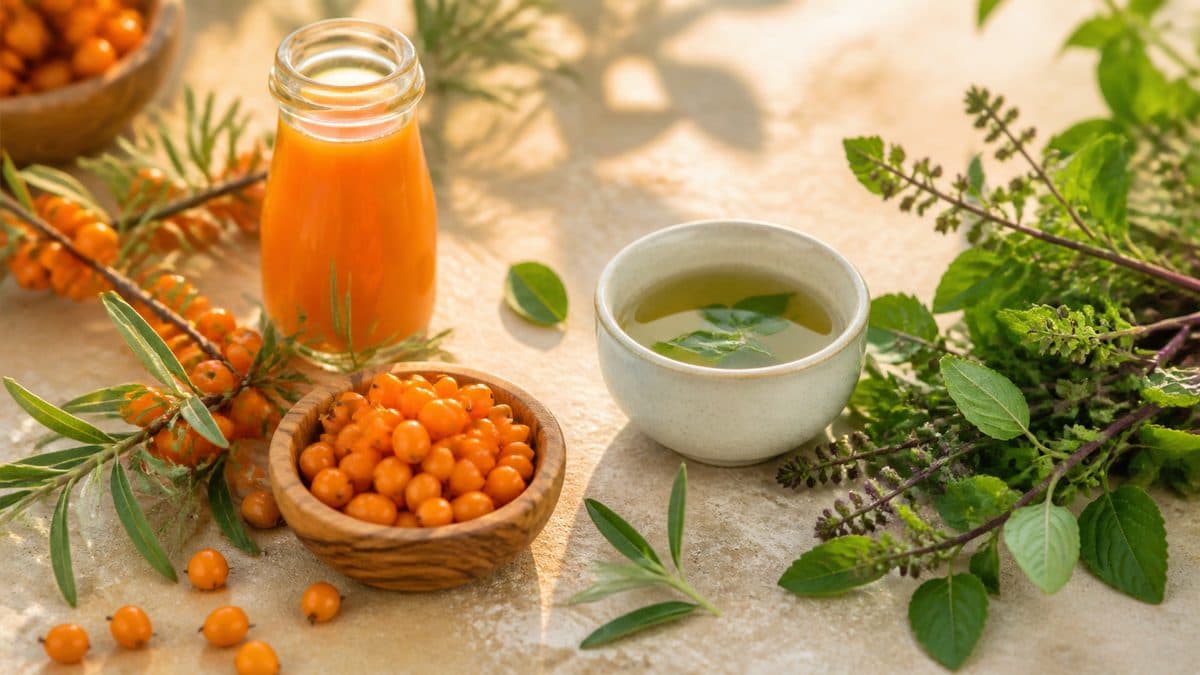
A realistic routine does not involve taking everything at once and hoping. Turmeric belongs in daily cooking, where it costs nothing and needs no thought. Sea buckthorn juice is a separate daily habit: the usual Biosash approach is around 10 ml morning and evening, mixed in water, roughly twenty minutes before meals. It is tangy and quite acidic, so dilute it well. Guggul, being a compounded Ayurvedic preparation, is the one to discuss with a practitioner before starting.
Introduce one thing at a time. If you start three new items in a week you will have no idea what agreed with you and what did not. Give each a fair stretch before deciding, since nutrition works on a scale of weeks rather than days.
Quality is worth checking too. Biosash sources from Himalayan sea buckthorn and manufactures under WHO-GMP certification, with batch testing at a NABL-accredited laboratory. For traditional formulations in general, knowing who made something and how it was tested tells you more than the ingredient list alone.
Turmeric, guggul and sea buckthorn have each earned a place in Indian wellness traditions for their own reasons. Treat them as part of a routine built on movement, decent food and adequate sleep, keep your own doctor informed, and you have a sensible approach to staying active rather than a shortcut that does not exist.